


Financial abuse is a growing concern in Papua New Guinea, and financial institutions have a critical role in preventing and responding to it. To support this effort, the Bank of Papua New Guinea (BPNG) has initiated Empower Finance Kibung, a community of practice designed to strengthen institutional responses to financial abuse and product misuse.
Following its successful launch, Empower Finance Kibung convened discussions with financial institutions to introduce a survey on financial abuse and a voluntary code of practice. The code will be used to guide institutions in areas such as financial capability, literacy, management, training, safety, and counselling.
At the launch on 14 May 2026, BPNG Governor Elizabeth Genia emphasized the seriousness of financial abuse, noting that all financial institutions encounter cases affecting customers.
“Financial abuse affects people in very real ways. It limits independence and creates significant harm within families and communities. It also undermines safety, inclusion, and consumer protection when financial products and services are misused. Addressing financial abuse is clearly within our mandate as regulator,” Governor Genia said. “While women are more often affected, this is not only a women’s issue. Financial abuse can impact anyone – individuals, families, and even organizations.”
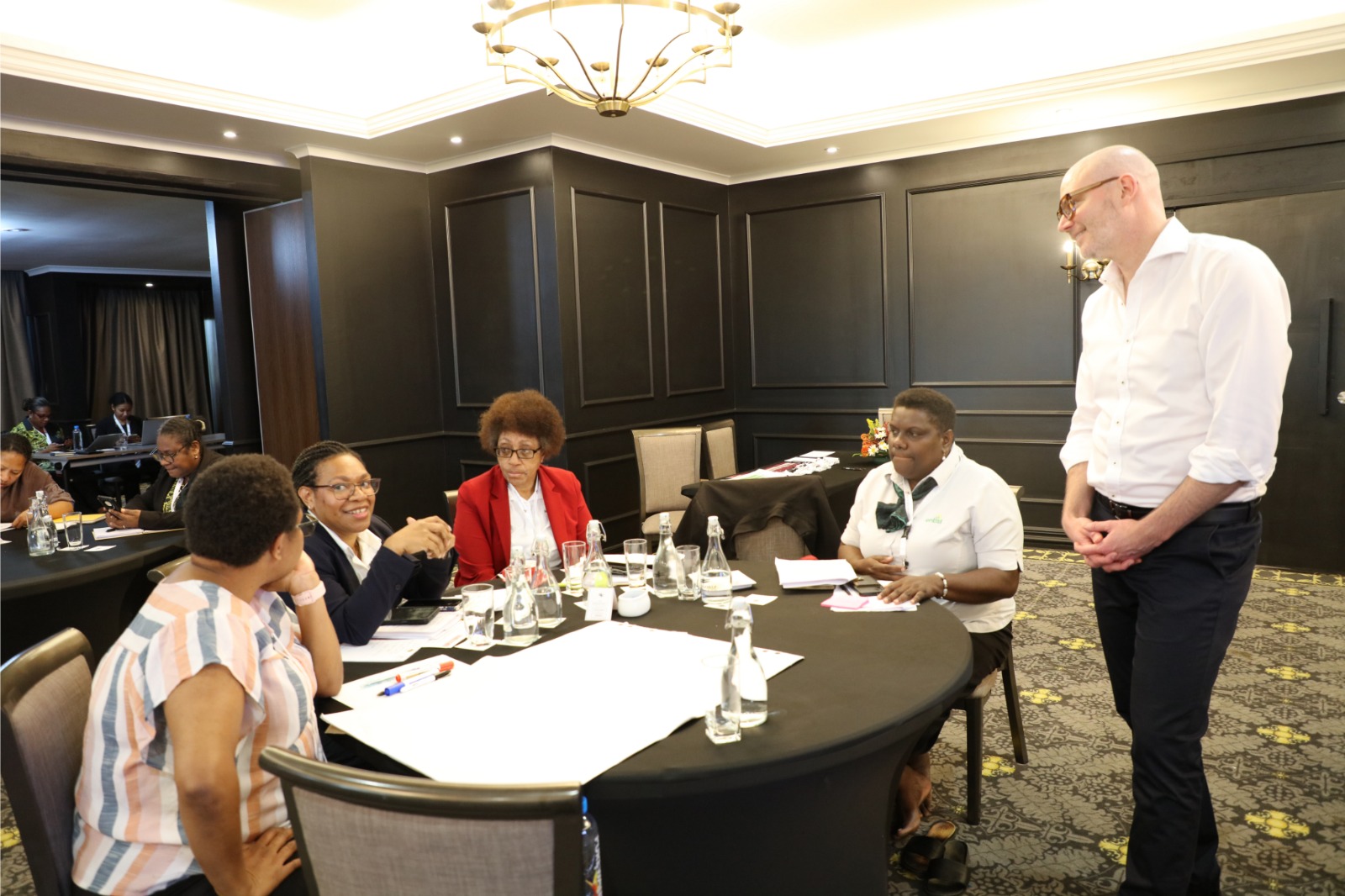
Empower Finance Kibung brings together representatives from financial institutions across PNG for in-person workshops. The sessions aimed at building a shared understanding of financial abuse and the role of institutions in addressing it.
The workshop introduced participants to the program’s objectives, learning pathway, and collaborative framework. It provided space for reflection on how financial products, services, and technologies can be misused in personal relationships, and the implications for customers, staff, and institutions.
The workshop was designed to:
• Build awareness and shared language around financial abuse, distinguishing it from fraud and scams, and positioning it as a core business and risk issue.
• Support institutions to define their role in prevention and response, aligned with their mandates and operating contexts.
• Kick-start structured peer learning grounded in practical tools, lived experience, and regional context.
• Lay the groundwork for diagnostics, action plans, and implementation throughout the program.
• Workshop the proposed voluntary financial abuse code.
• Celebrate this milestone with participants and key stakeholders.