


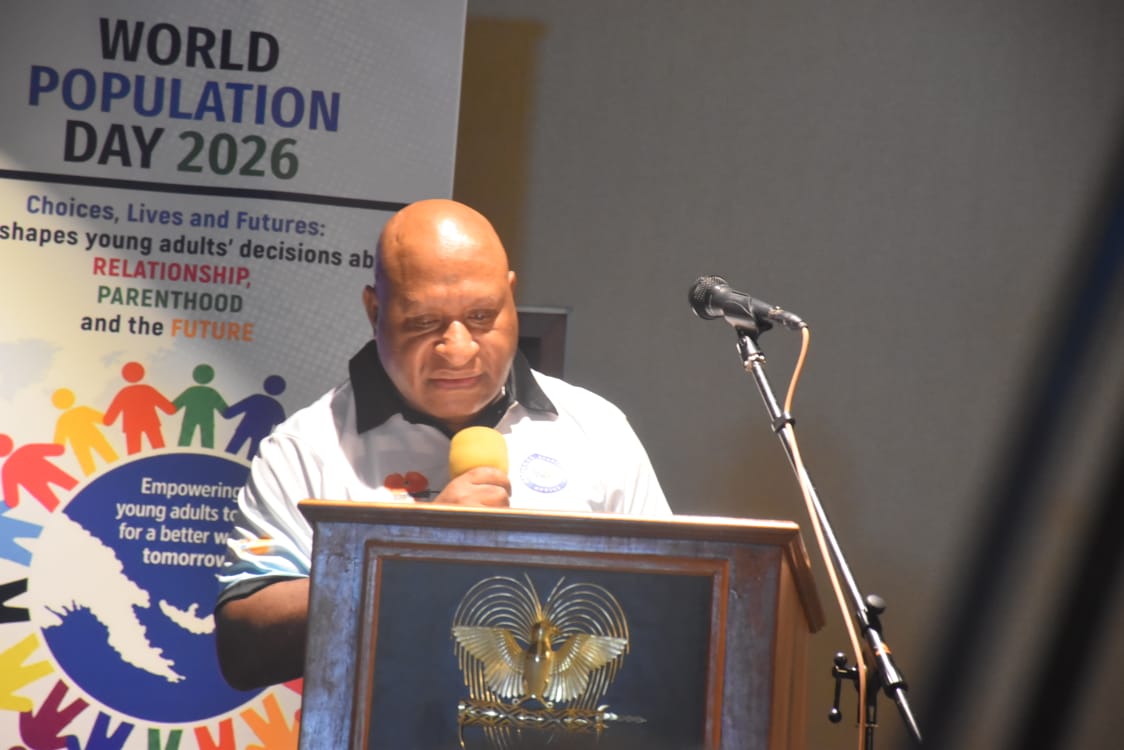
MORE than half of Papua New Guinea’s population is under the age of 25, placing young people at the centre of the country’s future workforce and development, National Statistician Mr Alfred Mokae says.
Mr Mokae highlighted the country’s young population during the World Population Day 2026 commemoration at APEC Haus in Port Moresby yesterday, saying population data was essential to understanding the needs and choices of young Papua New Guineans.
He said the large proportion of young people presented both an opportunity and a challenge for the country as it plans for its future.
“Population information provides government with a basis for understanding these needs and deciding where resources should be directed,” Mr Mokae said.
He said young people’s decisions about education, employment, relationships and starting families were closely linked to the opportunities available to them.
Access to quality education, jobs, healthcare and reproductive health services would therefore be important in determining how PNG’s young population contributes to the country’s future, he said.
The 2024 National Population Census recorded a total population of 10,185,363, comprising 5,336,546 males and 4,848,817 females.
The population grew at an average annual rate of 2.6 per cent between 2011 and 2024.
Mr Mokae said this continued population growth would increase demand for schools, hospitals, housing, roads and other infrastructure, as well as employment opportunities.
“The growth in population also affects demand for schools, hospitals, housing, roads, other infrastructure and employment,” he said.
He said population statistics could help government determine how many young people were in school, how many were outside the education system and how many were looking for work.
The data could also show whether communities had adequate access to health and reproductive health services, he said.
Mr Mokae said the National Statistical Office was working to improve how population information was collected and used, including making future census activities more modern, digital and accessible to people in remote communities.
“The office is also working towards stronger links between population information and national systems, including the National Identification programme,” he said.
The World Population Day programme brought together government agencies, development partners, research institutions, youth representatives and civil society.
Presentations examined PNG’s population changes from 1980 to 2024, youth characteristics from the 2022 Social and Demographic Economic Survey, findings from the 2024 National Youth Survey and results from the UNFPA Demographic Futures Survey.
The discussions focused on understanding what young Papua New Guineans want for their future and the factors that could shape their decisions around education, employment, relationships and family formation.
For PNG, the challenge is not simply having a young population, but ensuring young people have the education, skills, employment opportunities and services needed to become a productive future workforce.