


BY ESWIN PLESIO
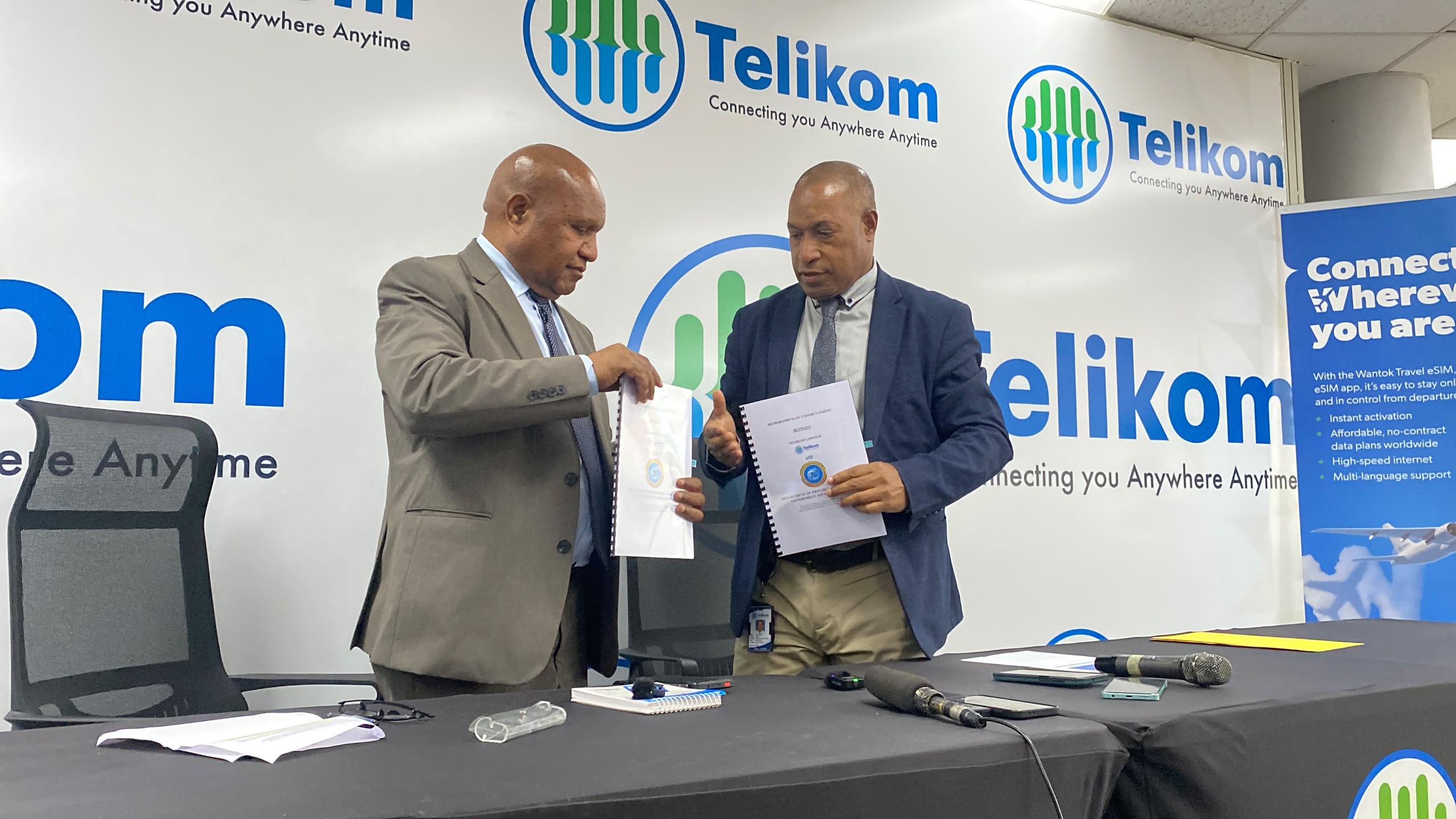
PAPUA New Guinea has taken another step towards improving digital connectivity in rural communities after the Department of Provincial and Local Level Government Affairs (DPLGA) and Telikom PNG signed a Memorandum of Understanding (MoU) to roll out 7,000 Starlink terminals nationwide.
The agreement, signed at Telikom Rumana in Port Moresby on Monday (02/08/26), will provide internet connectivity to all 6,912 wards and 375 Local Level Governments (LLGs), supporting the department’s National Ward Record System and improving the collection of real-time data for planning and service delivery.
Telikom PNG Group Chief Executive Officer Amos Tepi said the partnership would enable the department to connect communities across the country and gather information needed for national development.
“As Papua New Guinea’s authorised national Starlink reseller, we are committed to providing the connectivity needed to support the department’s work from the provincial level down to every ward,” Mr Tepi said.
“The data collected will help inform planning, budgeting and policy decisions while ensuring even the most remote communities are connected.”
Mr Tepi said the partnership also supports the country’s digital sovereignty by ensuring government data is securely managed through Telikom PNG’s expanding digital infrastructure.
DPLGA Secretary Philip Leo said the agreement marks a significant milestone in the department’s efforts to digitally connect rural Papua New Guinea.
He said the National Ward Record System transforms the traditional ward record books into a digital platform capable of capturing demographic and socio-economic information from every ward in the country.
“For nearly 50 years we have struggled to digitally connect our rural population,” Mr Leo said.
“The information government needs for planning and policymaking is in our villages. With this partnership, we can finally bring that information into one national system.”
Mr Leo said the platform would be supported by the department’s network of 6,912 councillors and ward recorders, providing reliable information for government agencies, including those responsible for elections, national identification, education and health.
He said the partnership was about more than technology.
“It is about connecting every Papua New Guinean, no matter how remote their community is, so development decisions are based on accurate information from the ground,” he said.