


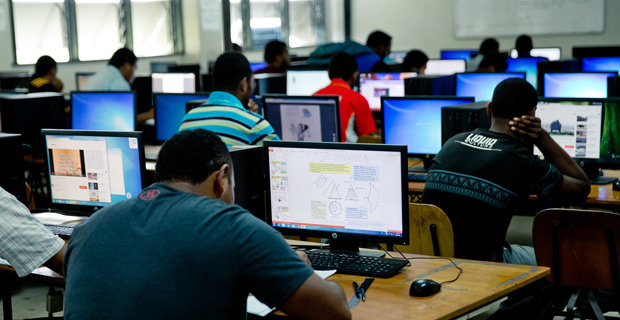
ST JOHN’S, (PACNEWS) – Fiji has been ranked the Pacific’s leading island nation for youth artificial intelligence (AI) readiness, placing 12th among 56 Commonwealth countries, with the technology projected to generate up to US$90 million (K400million) in additional GDP over 10 years.
The findings are contained in the new Ayre Index, launched at the Commonwealth Heads of Government Meeting (CHOGM) in Antigua and Barbuda, which assesses the opportunities and challenges facing young people in adopting and benefiting from AI.
Fiji scored 56.9 out of 100, exceeding the study’s readiness benchmark of 53. Only 15 Commonwealth countries reached that threshold.
The ranking places Fiji ahead of South Africa and Nigeria, while Papua New Guinea was the next highest-ranked Pacific island country at 32nd, followed by Nauru at 39th and Samoa at 41st. Australia ranked third and New Zealand ninth.
The study, conducted by the Ayre Think Tank, examines conditions affecting young people across the Commonwealth, including approximately 229,000 young people in Fiji.
Applying scenarios developed by the International Monetary Fund to Fiji’s economy, researchers estimate AI could increase the country’s GDP by US$90 million under a moderate scenario over 10 years.
The potential increase ranges from US$43 million under a conservative scenario to US$136 million under an optimistic projection.
The findings also show strong adoption of AI among young Fijians.
A 2025 survey found 62.5 percent of young respondents had used AI for their studies, while 49.3 percent had used it for work. A further 85.3 percent expected to use the technology in education or employment over the following year.
Fiji scored 9.9 out of 10 for AI use and creation and 9.3 for motivation and confidence, placing it among the strongest performers in the Commonwealth.
However, the study identifies significant gaps in the digital skills and infrastructure needed to translate that enthusiasm into economic opportunities.
Fiji scored 3.6 out of 10 for digital capability and 3.8 for education and training. The research also found that 71.2 percent of businesses surveyed reported internet disruptions.
Ayre Think Tank founder Calvin Ayre said young people needed practical skills and opportunities to benefit from the economic changes driven by AI.
“AI is going to change how we work, how we do business and how wealth is created. But this is not a race that only the biggest or richest countries can win,” Ayre said.
“What matters is giving young people the skills and the chance to get ahead – whether to start businesses, find jobs or build something for themselves.”
He said the index was designed to show countries their strengths and weaknesses and help governments identify where improvements were needed.
“Nobody can afford to be complacent,”” he said.
Fiji has already begun investing in digital skills development as part of its ambition to create 40,000 jobs in the digital economy by 2030.
In October, a Digital Skills Hub opened at the University of the South Pacific (USP) in Suva, providing practical training in AI, networking and cybersecurity.
The initiative, developed in partnership with Cisco and Telecom Fiji, aims to prepare young Fijians for employment in the technology sector and support business development.
The study identifies five priorities for Commonwealth countries: affordable and reliable access to technology; practical education and skills training; stronger pathways from training into employment and enterprise; AI tools suited to local languages and needs; and safeguards allowing young people to question automated decisions.
Professor C. Justin Robinson, Pro Vice-Chancellor and Campus Principal of the University of the West Indies, Five Islands Campus, said young people must be equipped to develop and shape AI technologies rather than simply consume products created elsewhere.
“We need to make sure that the next generation will be able to do more than just consume AI products made elsewhere. Access must come with its own agency and a real equitable stake in how these systems are governed,” Robinson said.
He said young people should be able to question AI tools, improve them and develop alternatives suited to their own needs.
The report calls on governments, educators and development partners to identify the specific barriers facing young people in each country and direct investment towards closing those gaps….PACNEWS