


By DALCY LULUA
THE Independent Consumer and Competition Commission (ICCC) and the National Procurement Commission (NPC) have strengthened efforts to combat bid rigging in public procurement, warning that anti-competitive collusion continues to undermine value for money and the delivery of quality public infrastructure.
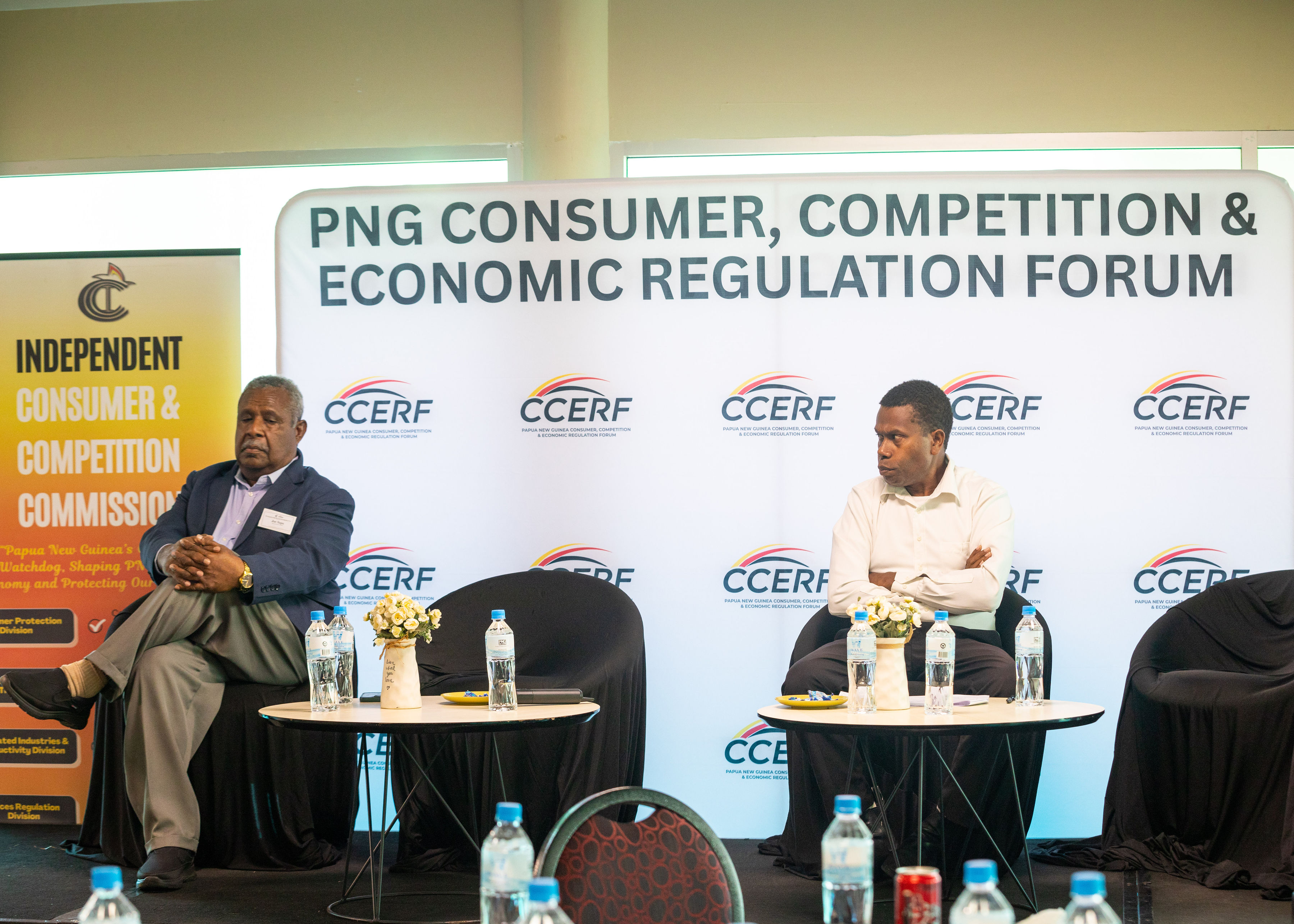
In a statement released on Wednesday (05/08/26), the ICCC said the issue was a key focus of discussions during the recently concluded PNG Consumer, Competition and Economic Regulation Forum (PCCERF), which brought together representatives from the ICCC, NPC, the private sector, and competition law experts from New Zealand and Australia.
The forum highlighted that bid rigging in public procurement can inflate the cost of government contracts, result in poor-quality work, and divert scarce public resources from other priority services.
Competition experts from the New Zealand Commerce Commission (NZCC) and the Australian Competition and Consumer Commission (ACCC) shared experiences from their countries, noting that bid-rigging cartels operate even in developed economies.
The ICCC said that if such cartels exist in Australia and New Zealand, Papua New Guinea is also vulnerable, and procurement officials should remain vigilant when assessing State contract tenders.
The Organisation for Economic Co-operation and Development (OECD) estimates that eliminating bid rigging could reduce procurement costs by 20 per cent or more.
Among the recommendations discussed was requiring bidders to declare that they had not colluded when submitting tenders, with significant penalties for false declarations.
Representatives from the private sector, including the Institution of Engineers PNG, Hebou Construction and Sun Engineering, stressed that government procurement processes must be transparent and provide a level playing field for all bidders. They also argued that contract awards should not be based solely on the lowest price but should also consider a contractor’s ability to deliver quality work within a reasonable timeframe.
The NPC also outlined progress on its Electronic Government Procurement (e-GP) System, a project supported by the Asian Development Bank, which aims to digitise the government’s procurement process from planning through to contract management to improve efficiency, transparency and accountability.
The ICCC also outlined several new initiatives aimed at detecting and deterring cartel behaviour. These include a Leniency Policy encouraging cartel participants to report illegal conduct in exchange for reduced or no penalties, the development of a whistleblower program, an anonymous online reporting platform, and new provisions in the proposed Competition and Consumer Protection Bill that specifically prohibit bid rigging, bid suppression and market sharing.
The forum concluded with the signing of a Memorandum of Understanding between the ICCC and NPC to strengthen cooperation in preventing and investigating bid rigging in public procurement.
ICCC Commissioner and Chief Executive Officer Roy Daggy described the agreement as an important step in protecting public resources.
“Through this partnership, the ICCC and NPC will work together more effectively by sharing critical information and procurement data, conducting joint audits and investigations into suspected bid rigging, building capacity among our officers, and raising public awareness to promote transparency and integrity in the public tender process,” Mr Daggy said.