


By GEORGINA MICHAEL
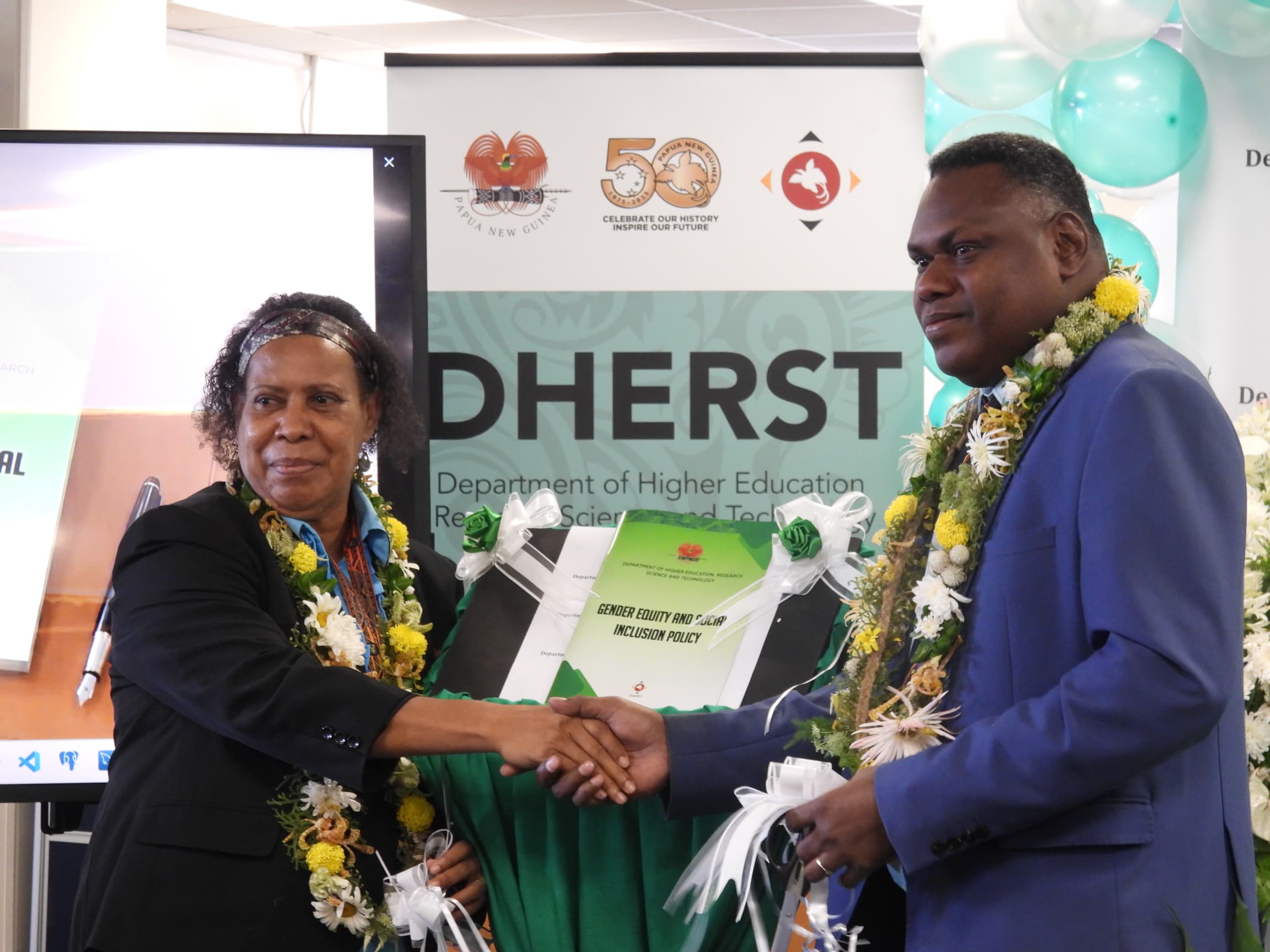
The Department of Higher Education, Research, Science and Technology (DHERST) has launched its Gender Equity and Social Inclusion (GESI) Policy, marking the Department’s commitment to creating a fair, safe and inclusive workplace for all its staff, stakeholders and partners.
The GESI policy aims at outlining key strategies to address inequalities discrimination and to promote an inclusive workplace culture.
The policy was developed using baseline data and information gathered during an initial GESI Sensitization Workshop conducted in March 2025 by the Improved TVET for Employment Project (ITVET4E) for DHERST staff and management.
DHERST Secretary Lonnie Baki elaborated on the importance of the GESI policy highlighting
“From a global perspective, gender equity and social inclusion are increasingly recognized as essential to sustainable development, strong institutions and social cohesion. Regionally in the Pacific, inclusive governance and equal participation of women, youth and persons with disabilities are seen as key to resilience and progress whilst nationally, GESI is critical to ensuring that every citizen can contribute meaningfully to national development, and these commitments aligning to our national development frameworks,” Mr Baki said.
“Despite existing policy frameworks, GESI policy provides a deliberate and structured approach to address barriers that are often overlooked in mainstream policies. It strengthens fairness participation and ensures our systems work for everyone.
“Importantly (GESI) is not a policy for women alone, it is for everyone, men, and women, persons with disabilities, youth, marginalized individuals or groups benefits the entire organization whilst strengthening institutional performance.”
Deputy Secretary and GESI committee chair Ruth Philip highlighted the policy values and objectives.
“The DHERST GESI Policy sets out to guide leadership, management and governance by focusing on eliminating negative cultural norms and practices that perpetuate inequality, strengthen GESI reporting and alignment with National Development Plans and DHERST strategies, embed GESI within departmental systems, policies and operational processes, develop workforce capacity to effectively implement GESI initiatives whilst Preventing and responding to discrimination, harassment and violence in the workplace.” Mrs. Philip said
She added that the expected outcome of the policy going forward was to help DHERST build a more inclusive, respectful and equitable workplace for all employees.
“This would help build a more Inclusive and equitable DHERST by integrating GESI principles and values into department’s leadership and management practice as well as into departmental policies and procedures,” Mrs Philip said.
In alignment with the National Public Service GESI Policy 2013, the DHERST GESI Policy strengthens existing gender equality initiatives and social inclusion measures across the Department’s systems, processes and programs.
The policy also establishes the framework for developing a DHERST GESI Action Plan and a GESI Monitoring and Evaluation Plan. These forthcoming milestones, scheduled for this quarter, will translate the Policy into concrete, measurable actions and enable DHERST to track progress and impact over time.
Secretary Baki also acknowledged the developing partners from the Asian Development Bank and the Australian Department of Foreign affairs and Trade for their technical and financial support in putting together the GESI Policy.