


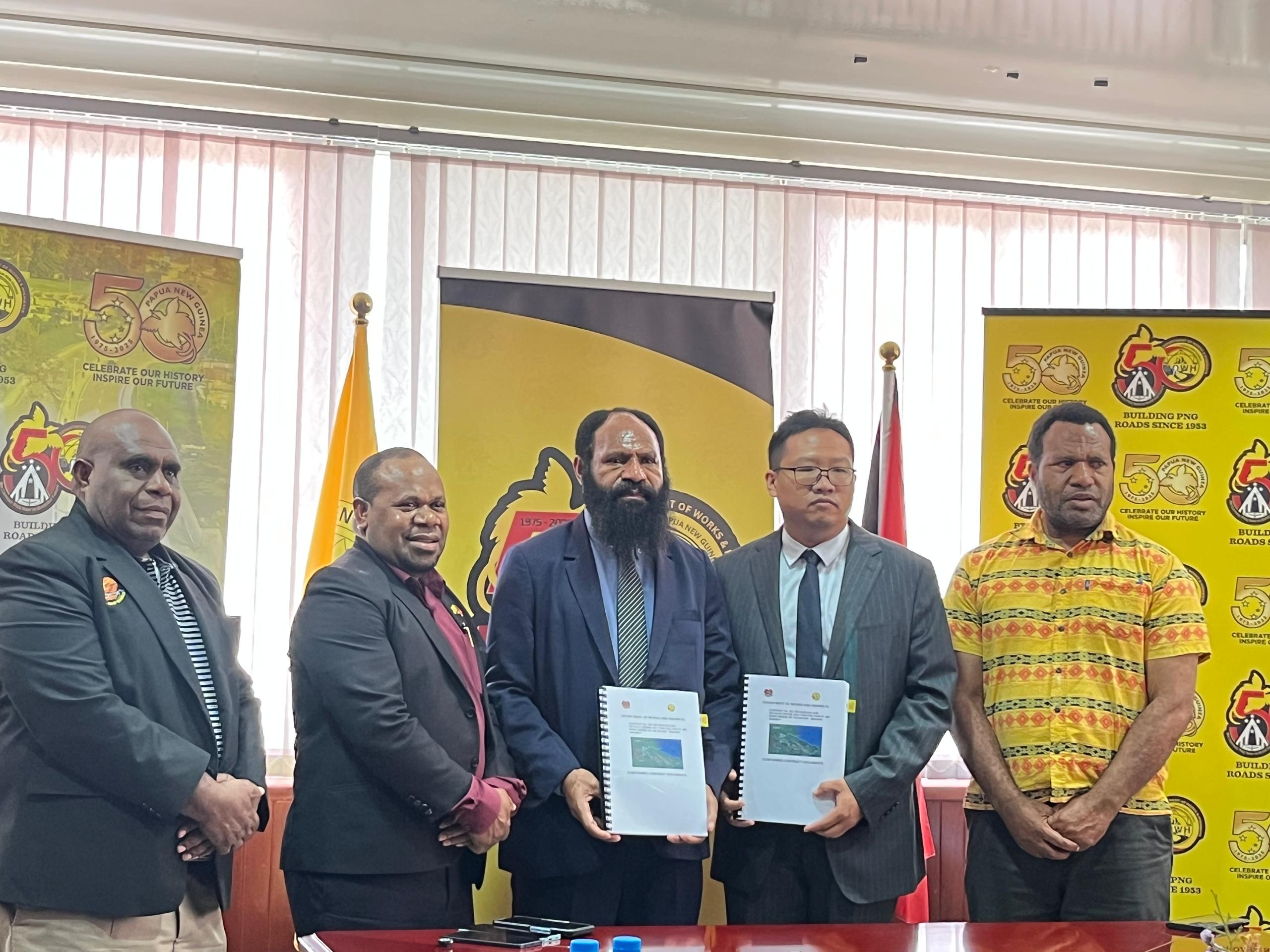
By GINNAH MINI
THE Department of Works and Highways (DoWH), through the Connect PNG Program, has signed a K20 million contract with China Civil Engineering Construction Corporation (CCECC) for the construction of a 120-metre bridge over the Jimi River, along the border of Western Highlands and Madang provinces.
The contract was signed on Friday, 23 October 2026, at the DoWH headquarters in the presence of Middle Ramu MP Kansol Kamdaru and key stakeholders.
The bridge is expected to be completed within six months and will improve connectivity along the Baiyer-Madang economic corridor.
Speaking at the signing ceremony, Mr Kamdaru highlighted the challenges faced by people in Middle Ramu, who have long been cut off from reliable road access. He said the bridge would improve accessibility and connect communities across the two provinces.
He noted that the Ramu and Jimi rivers had long been major barriers to connectivity, limiting people’s access to essential government services.
“This bridge will connect Western Highlands and Madang provinces. People often spend a lot of money on airfares to access basic services due to the lack of road connectivity. With the bridge in place, it will connect the people, giving them easier access,” he said.
Mr Kamdaru said the district had significant cocoa and coffee production potential, adding that improved road and bridge connectivity would benefit local communities and contribute to the national economy.
CCECC Managing Director John Wong acknowledged the importance of the project and pledged to complete the bridge within the agreed timeframe.
DoWH Secretary Gibson Holemba said communities along the Baiyer-Madang corridor had been struggling with connectivity challenges for the past 12 years.
He commended Mr Kamdaru for his leadership in addressing the missing links in the province’s road network.
Mr Holemba also acknowledged the Marape-Rosso Government’s Connect PNG Program for its role in improving access to remote communities across the country.
“Our current target for this year is to connect Baiyer-Madang, and we are working very closely with the member to support him to pull this off,” Mr Holemba said.
He said the signing of the bridge contract demonstrated the cooperation needed to complete critical missing links in the country’s road network.
Mr Holemba described the Baiyer-Madang corridor as a critical economic route with potential to support mining, agriculture and livestock development, translating improved connectivity into greater economic productivity.
He concluded that the project would improve access for local communities while creating opportunities for economic growth and development.