


By CYRIL GARE – Freelance Journalist
Prime Minister, James Marape is courting the idea of establishing the country’s first ever Essential Oil and Fine Chemical industry during his term in Office. Upon implementation, it will be Marape’s greatest hallmark yet again in his stake in “taking back PNG” and making PNG a richest black Christian nation of our time with an anticipated economy reaching K200 billion mark by 2050.
Unforsaken from the imminent VoNC (vote of no confidence) expected sometime in March next year, a confident Marape is secured with numbers for any onslaught to remain through and see such projects get to fruition.
Based upon a well-researched scientific proposal before him which he has footnoted, the Prime Minister described the idea as “good” and “need to be processed”.
A seed grant financing (SGF) is sought from the Government by a local company that is well versed in the area of Essential Oil and Fine Chemicals. The company will construct and operate the country’s first phytochemical extraction plant that will kick off this new industry in the R&D innovative project space like never before.
What are Essential Oils?
Phytochemicals are plant extracts also known as Essential Oils that when processed can be used in medicine for cancer, HIV, Covid and malaria treatments or in cosmetic, fragrance and food application. They are made by steaming or pressing various parts of a plant (flowers, bark, leaves or fruit) to capture the compounds that produce fragrance. It can take several kilograms of a plant to produce a single bottle of Essential Oil.
This is an exciting episode in the life of PNG as a nation as his Government takes a serious turn into the world of science and technology for development of innovative industries that are expected to bring in hundreds of billions of kina in export earnings.
Market Value
World’s market value of Essential Oils stand at 27 billion US dollars in 2022. It grew from 17 billion US dollars in 2017. (Essential Oils Market Worldwide – Statistics & Facts | Statista).
Hopeaphenol – PNG’S Cure for the world
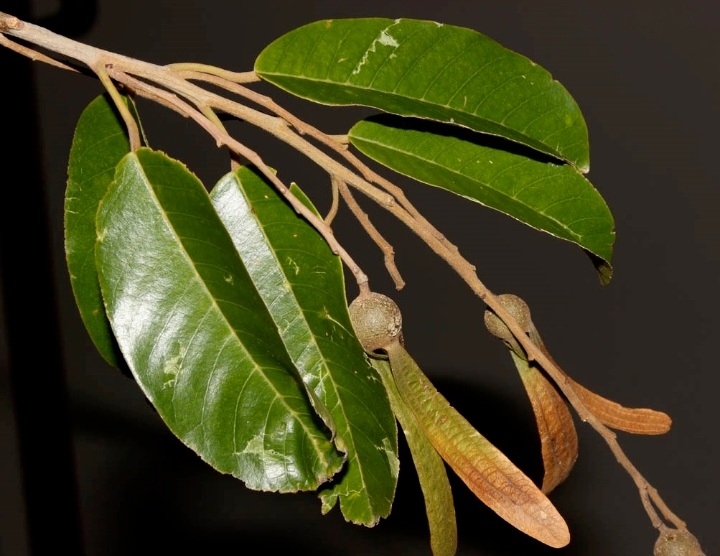
Apart from massoy, vetiver and patchouli, hopeaphenol – a chemical compound from PNG’s native plant anisoptera thurifera and the leading candidate currently for treatment of covid and HIV will be the first lot of plants to be processed for extraction of their phytochemicals. PNG has set its target of eradicating HIV AIDS in the country by 2030. In April this year, the American Society of Microbiology (ASM) has published its research findings on hopeaphenol effectively citing it as a leading candidate for treatment of Covid and AIDS viruses. PNG’s hopeaphenol is the cutting-edge scientific creation which not only “kills” the HIV virus it also carries “no side effects” on the user. Hopeaphenol has been a joint collaboration been 17 scientists from around the globe including PNG’s very own Professor of Chemistry, Topul Rali since 1996 when he first collected and sent samples of the anisoptera thurifera to Australia’s Griffith University for analysis and testing against targeted diseases in a drug discovery program. ASM acknowledged and gave credit to these 17 who operated out of: The Wistar Institute, Philadelphia, Pennsylvania, USA; Faculty of Health Sciences, Simon Fraser University, Burnaby, British Columbia, Canada;Jonathan Lax Immune Disorders Treatment Center, Philadelphia Field Initiating Group for HIV-1 Trials, Philadelphia, Pennsylvania, USA;Griffith Institute for Drug Discovery, School of Environment and Science, Griffith University, Brisbane, Queensland, Australia; andSchool of Natural and Physical Sciences, The University of Papua New Guinea, Port Moresby, Papua New Guinea.
From Oil to Crystals
PNG has gone a step further – from oil from leaves to making crystals from oil. In May this year fourth year UPNG Chemistry students during a lab practical under the strict supervision of Prof. Rali, extracted hopeaphenol from anisoptera thurifera leaves.
“From 400 grams of leaves, we were able to extract 1.933 grams of crystals. This is very exciting, an extraordinary find because you do not usually get this much compound from a single plant extract.
“Also, we’ve not tried the bark and wood of this tree yet to determine which parts of the tree has high hopeaphenol content and also to evaluate the total amount of the compound in an Anisoptera thurifera tree,” Prof. Rali said adding that from the 1.933 grams of crystals, 39 tablets can be made for a PLHIV patient, that’s more than a month’s dozes.
He is optimistic about clinical trial on PLHIV – to be orally administered alongside the current ART (antiretroviral treatment) so that further evaluations can be obtained from there.
Prof. Rali said under the National Research Agenda (NRA) the Government has created the Research, Science and Technology Secretariat (RSTS) since 2014 and its time the Government ‘walk the talk’ by turning the RSTS into a CSIRO equivalent by investing around a billion kina or more every year in R&D projects that would revolutionize the economy and spin the wheel of change.
Hopeaphenol is currently in the float and at the mercy of big pharmas like AstraZeneca, Johnson & Johnson, Pfizer, Merck, Gilead, Amgen and AbbVie to take it on full commercialization and ‘cure the world’.
Development of a medicinal drug from hopeaphenol will create thousands of jobs and bring in hundreds of billions in export earnings and support the Prime Minister’s vision of a K200 billion economy by 2050. PNG’s hopeaphenol will dominate the current global HIV drug market size which is valued at USD $28.79 billion in 2020 and is projected to grow from USD $30.46 billion in 2021 to USD $45.58 billion in 2028 at a CAGR (compound annual growth rate) of 5.9% in forecast period, 2021-2028 (https://www.fortunebusinessinsights.com/industry-reports/hiv-aids-drugs-market-101115).
The prevalence of HIV is surging at a significant rate which World Health Organization (WHO) estimates that 33 million people are living with a HIV infection. This has subsequently led to a surge in demand for HIV medications with high potency for treatment and management of the disorder. PNG would dictate the world HIV drug market with full commercialization and supply of hopeaphenol in the market.
PNG PLIGHT
UNAIDS statistics for PNG published in 2021: New infections – 3,800, PLWHIV – 59,000, People on ART – 38, 376 i.e 65% ART coverage, AIDS related deaths – 530.
Rates of HIV infection in PNG have risen dramatically in the last ten years, a 45% increase in HIV infections from 2010 to 2021. Most of these cases are women.
In 2022, the Marape Government allocated K2.5 billion to the health sector, a massive 39% increase in real terms from 2021 budget. It cannot be established from this funding as to how much was actually allocated for the procurement of antiretroviral therapy or ART drug in that year.
Nonetheless, the GoPNG is responsible for 72% of ART spending every year since 1987 when HIV AIDS was first detected in PNG despite steady donor financing of the HIV AIDS sector projects and programs.
According to PNG NASA (National AIDS Spending Assessment) Report of 2021, ASC (AIDS Spending Categories) for ART recorded as follows: 2016 – K3,518,035 2017 – K3,464,071 2018 – K4,767,955, and 2019 – K9,128,897 The use of hopeaphenol in PNG will greatly help save lives and increase productivity. NACS will no longer say that PNG is still behind in its efforts towards achieving its global target to eliminate HIV and AIDS by 2030 compare to other countries. Instead, NACS will boast of God’s golden gift to mankind akin to “second salvation”.