


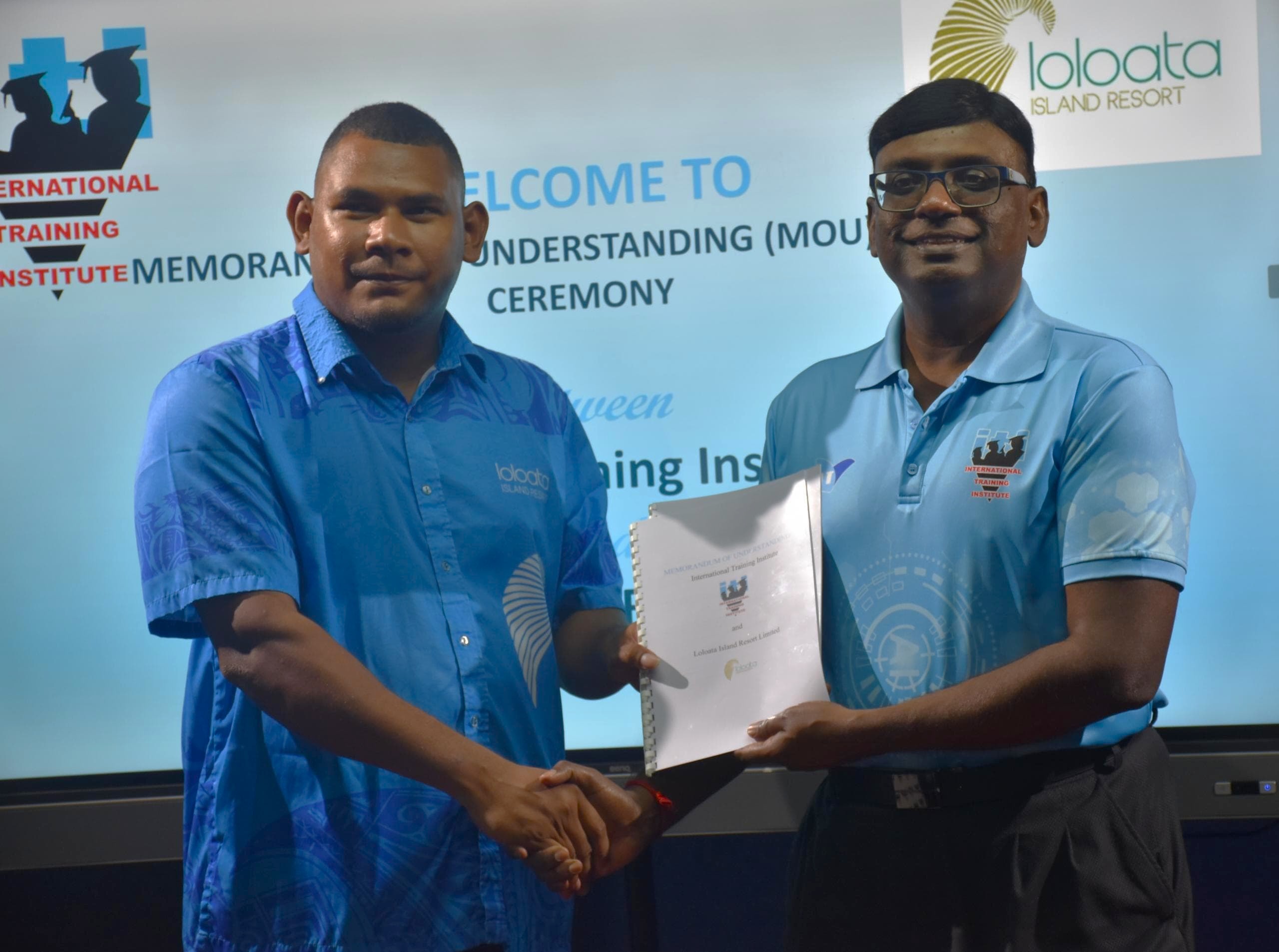
The International Training Institute has signed a five-year Memorandum of Understanding with Loloata Island Resort in Port Moresby to provide students with on-the-job training and internships.
Under the agreement, Loloata Island Resort will offer eight-week placements for ITI students in departments including Tourism and Hospitality, Human Resources, Accounting, and others aiming to bridge the gap between classroom learning and real-world hospitality experience.
Loloata Island Resort Human Resource Manager Mr. Allan Afu said the partnership is about practical exposure.
“Today’s signing is not just about signing a document. It is about opening doors for ITI students to do their on-the-job training with us. It’s about bridging the gap between the classroom and the dynamic world of hospitality,” Mr. Afu said.
He noted that Loloata Island Resort is one of PNG’s five-star hotels and believes the best way to learn is to open doors to students through direct experience.
“We encourage students to step out of textbooks and into PNG’s tourism environment, which is slowly growing,” he said.
Mr. Afu explained that students will be placed according to their programs of study to gain hands-on experience in different departments. He added that previous ITI students performed exceptionally well and the resort is looking forward to the next intake in December.
ITI Co-founder and Chairman Mr. Senthil Kumran Sentheyval acknowledged Loloata Island Resort for the opportunity and highlighted the importance of practical training.
“The MoU is for five years and includes internships for both diploma and degree programs, benefiting around 20 to 25 students each batch,” Mr. Sentheyval said.
He said the partnership will give students valuable life experience in the tourism environment and is expected to encourage more enrolments in Tourism programs to meet the growing demand for hospitality staff in PNG.
The MoU is expected to create new opportunities for ITI students and strengthen collaboration between the two institutions, with a positive impact on students, the resort, and PNG’s Tourism industry.