


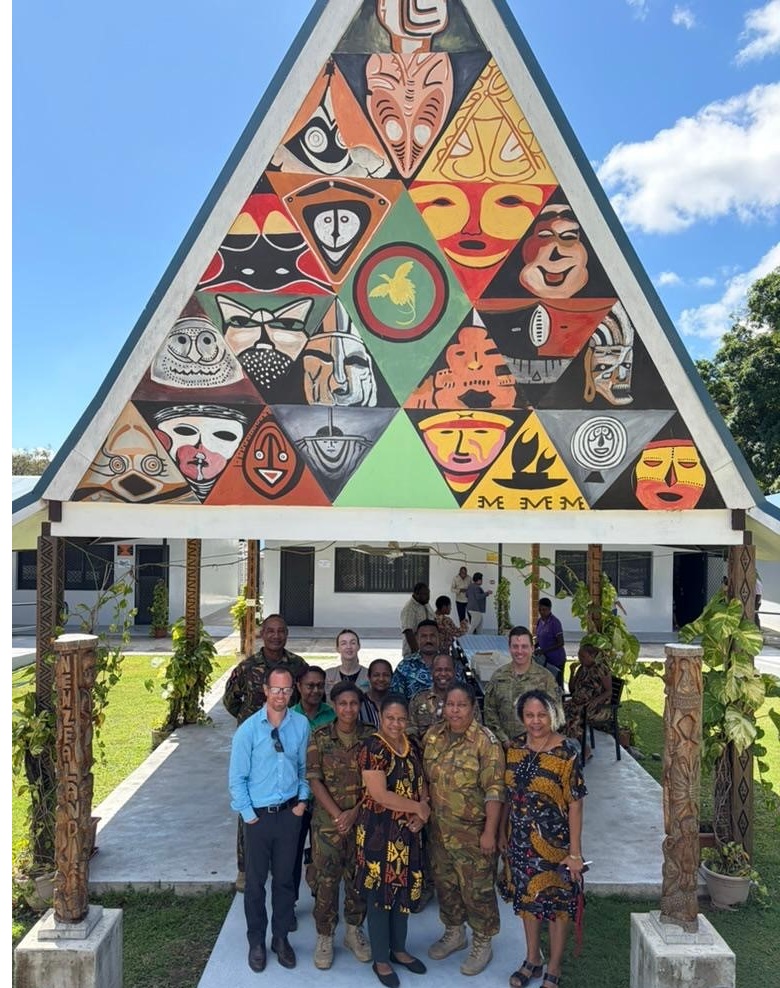
HEALTH officials, emergency responders and defence planners have come together to strengthen Papua New Guinea’s ability to respond quickly and effectively to future health emergencies.
The Civil-Military Operations for Response to Health Emergencies in PNG (CORE-PNG) planning workshop was held at the Kumul Leadership Centre at Murray Barracks. It brought together representatives from the Papua New Guinea Defence Force (PNGDF), the Australian Defence Force (ADF), the National Department of Health and researchers from the University of Newcastle.
It focused on improving how government agencies, defence forces and health experts work together during medical emergencies, particularly those caused or worsened by natural disasters.
This activity builds on earlier planning conducted in September 2025 and is part of a longer‑term effort to better prepare the country for large‑scale health emergencies. The outcomes from this workshop will guide two national tabletop exercises planned for later this year.
Participants discussed real‑world scenarios, clarified responsibilities and explored how the PNGDF can support civilian health authorities in times of crisis.
The training also highlighted the value of academic research in strengthening practical emergency responses. By working closely with health researchers, government agencies can use evidence‑based planning to improve decision‑making when time and resources are limited.
By strengthening cooperation between the National Department of Health, PNGDF Health Services and academic partners, the initiative aims to deliver faster, better‑coordinated responses when Papua New Guineans need help the most.
The collaborative approach between PNG and Australia reflects a shared commitment to protecting lives and improving health outcomes during emergencies.