


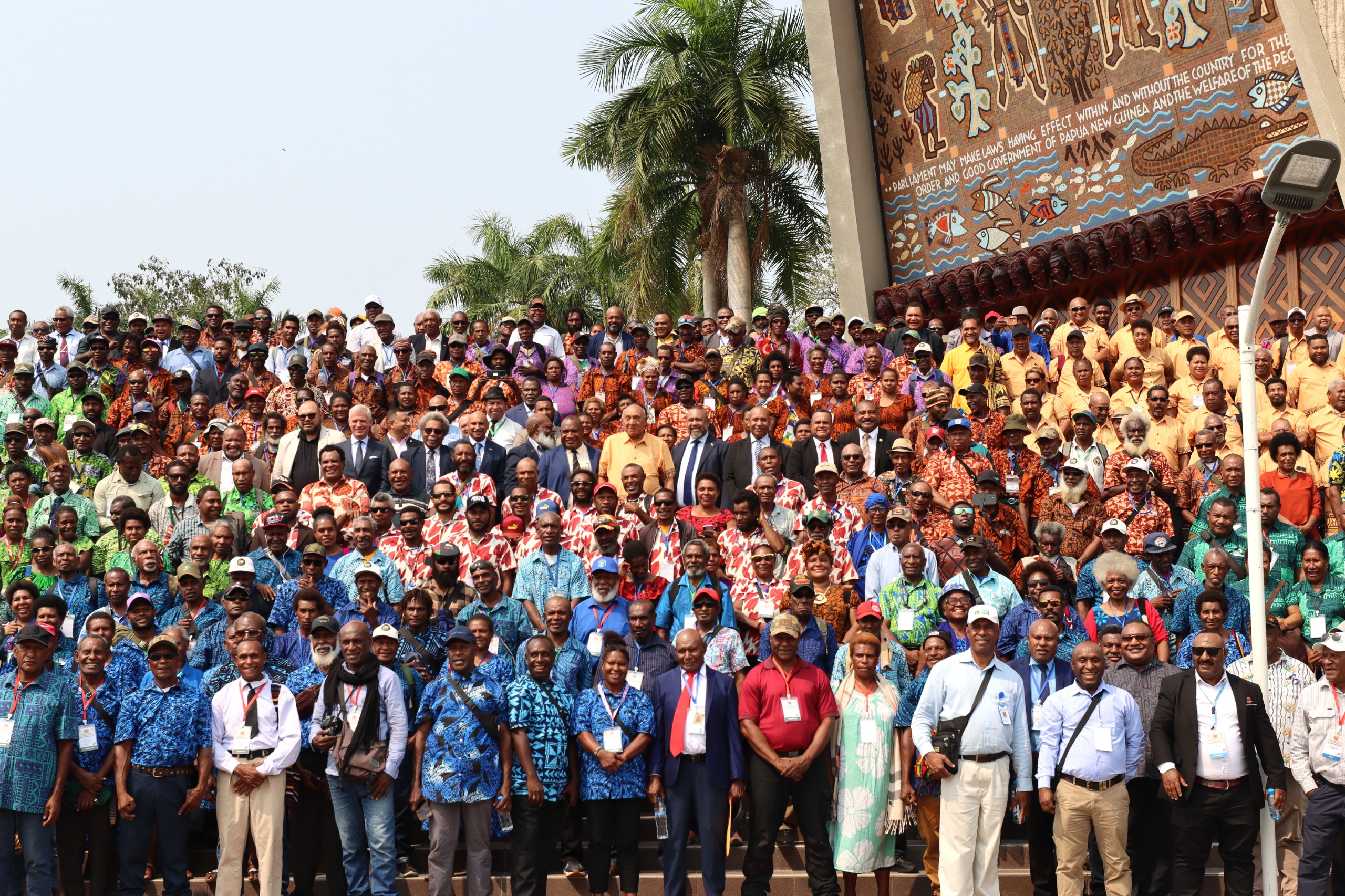
Prime Minister James Marape has strongly rejected Treasury projections suggesting Papua New Guinea could lose K28 billion in revenue by 2035 under revised fiscal arrangements for the Papua LNG project, declaring that the country will instead benefit from billions of kina in investment and long-term economic growth.
Speaking in Port Moresby on Monday, Mr. Marape personally guaranteed that government revenue would not decline from 2029 as a result of the multibillion-kina LNG development.
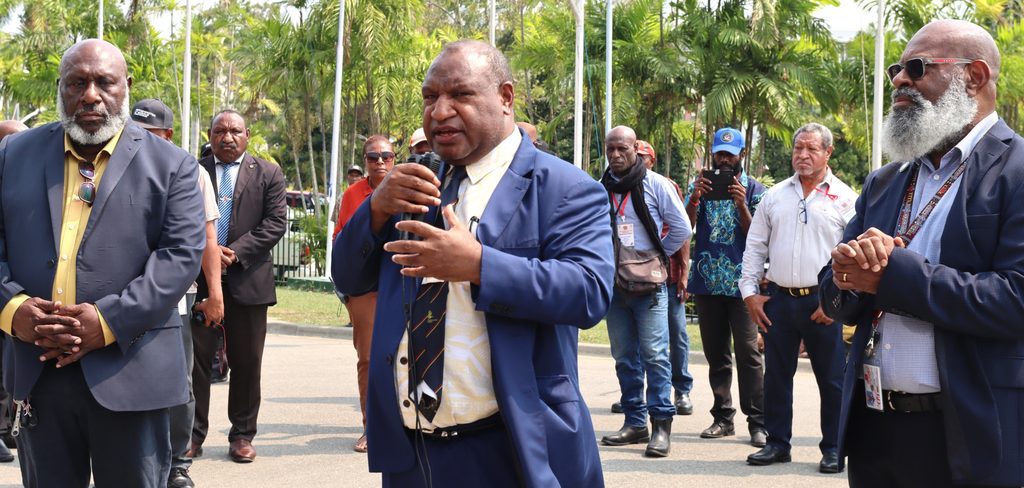
“I want to say from the outset, and someone can hold me to my words, that in 2029, there will not be a drop in PNG government revenue,” Mr. Marape declared.
His assurance comes amid differing financial assessments between the Department of Treasury and the State Negotiating Team (SNT), ahead of the project’s crucial Final Investment Decision (FID) deadline on December 15, 2026.
The Prime Minister has directed Treasury to reconcile its figures with the SNT, which disputes the projected revenue losses.
According to the SNT, Treasury has incorrectly classified temporary tax deferrals and State equity financing arrangements as permanent losses.
The negotiating team estimates the impact of accelerated depreciation at between K4.6 billion and K5 billion during 2029–2032, compared with Treasury’s K16.9 billion assessment.
Mr Marape defended the revised fiscal arrangements, including US$1.95 billion in price-linked concessions to investors, arguing that the Government had negotiated mechanisms allowing the State to benefit when international oil prices increase.
He said Papua LNG would generate approximately US$14.5 billion (K60 billion) in capital expenditure, while broader investment activities could inject an estimated K70 billion into the economy.
Construction activities expected to begin in 2027 would also generate employment, business opportunities and additional tax revenue.
The Prime Minister further assured landowners and provincial governments that their royalties, equity interests and development levies would remain protected.
He maintained that Papua New Guinea would secure more than 55 percent of the project’s total economic value.
Mr Marape said Papua LNG was part of a broader strategy involving P’nyang, Muruk and potentially Wildebeest, aimed at sustaining LNG-related construction and production for decades.
However, the significant differences between Treasury’s projections and the SNT’s assessment raise important questions about the long-term financial implications of the negotiated arrangements.
With the December 15 investment decision approaching, the reconciliation of these figures will be critical to establishing the project’s expected financial benefits to the State.
Mr Marape remained firm in his assurance.
“And I want to put my name behind this assertion, that there is no revenue loss starting 2029 onwards. It’s all an aggregate gain for the country going forward,” he said.