


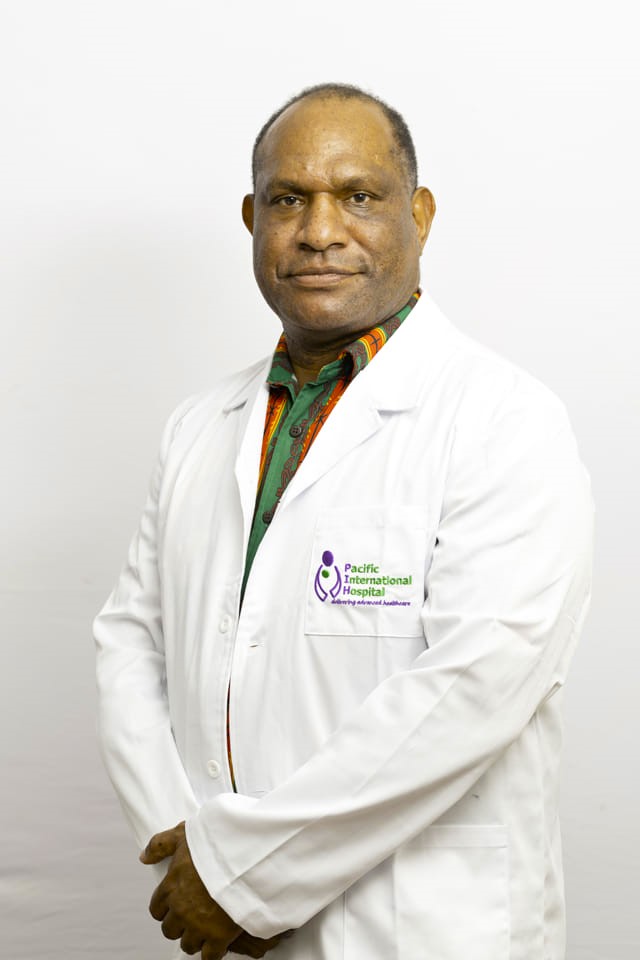
Amid growing debate over foreign-trained Bachelor of Medicine and Bachelor of Surgery (MBBS) graduates, President of the National Doctors Association Dr. James Naipao has stressed the need for strict regulatory standards before Papua New Guinean students with overseas medical degrees are allowed to practice locally.
Dr. Naipao warned that medicine is a “life and death industry” that cannot be compromised, urging the Government, PNG Medical Board, Department of Health, Higher Education Research Science and Technology (HERST), and the University of Papua New Guinea’s School of Medicine and Health Sciences to formally assess overseas universities where Papua New Guineans study.
He said foreign medical schools should only be recognised if their curriculum, clinical exposure, residency programs, and patient care training are equivalent to or superior to PNG’s medical training standards.
“PNG Medical Board cannot blindly register MBBS graduates from overseas medical schools unless they conform to our regulatory standards, clinical governance, and corporate governance,” Dr. Naipao stated.
Highlighting differences in training, he noted that many overseas MBBS programs are heavily theory-based, with limited patient contact, making it difficult for graduates to transition into PNG’s demanding clinical environment. In contrast, locally trained doctors undergo extensive bedside training in their final years, followed by two years of residency and housemanship, which equips them with strong practical skills.
Dr. Naipao defended the competence of PNG doctors, citing procedures such as cannula insertions, catheterisation, and incision and drainage, where local graduates often outperform counterparts from developed countries.
He referenced an Irish doctor who described PNG doctors as “some of the most clinically competent in the world despite the lack of sophisticated medical equipment.”
He also recalled past challenges faced by PNG students trained in China, many of whom struggled to meet PNG Medical Board requirements and were required to complete additional clinical training before registration.
While acknowledging PNG’s urgent need for more doctors, Dr. Naipao stressed that quality and patient safety must remain the top priority.
With the country’s doctor-to-population ratio at one doctor per 25,000 people, he warned against political interference in medical registration processes, insisting that healthcare standards must not be compromised.
How about the Health Extension Officer can they substitute a doctor for any urgent surgery is required from a dying patient where no doctor is available.
Yes. In rural settings most surgical procedures are done by the HEOs.
It is very true what Dr Naipao has just said. Medical training offered by Asian countries are of the lowest anywhere else in the world. Australia perhaps have nothing to gain from training overseas students besides the fees but they offer programs far superior than anything with the reach of PNG.
Asians, on the flip side offer craftily camouflaged training programs as a token to protect and secure what economic benefits they can get out of this country. The absence of training facilities within the country is quite telling of their hidden agendas.
Graduates in any discipline need careful scrutiny before engagement because standard of training offered in those Asian countries is so low no other country will want to gamble the risks. Australian qualifications are by far more superior than all others.
Comments are closed.