


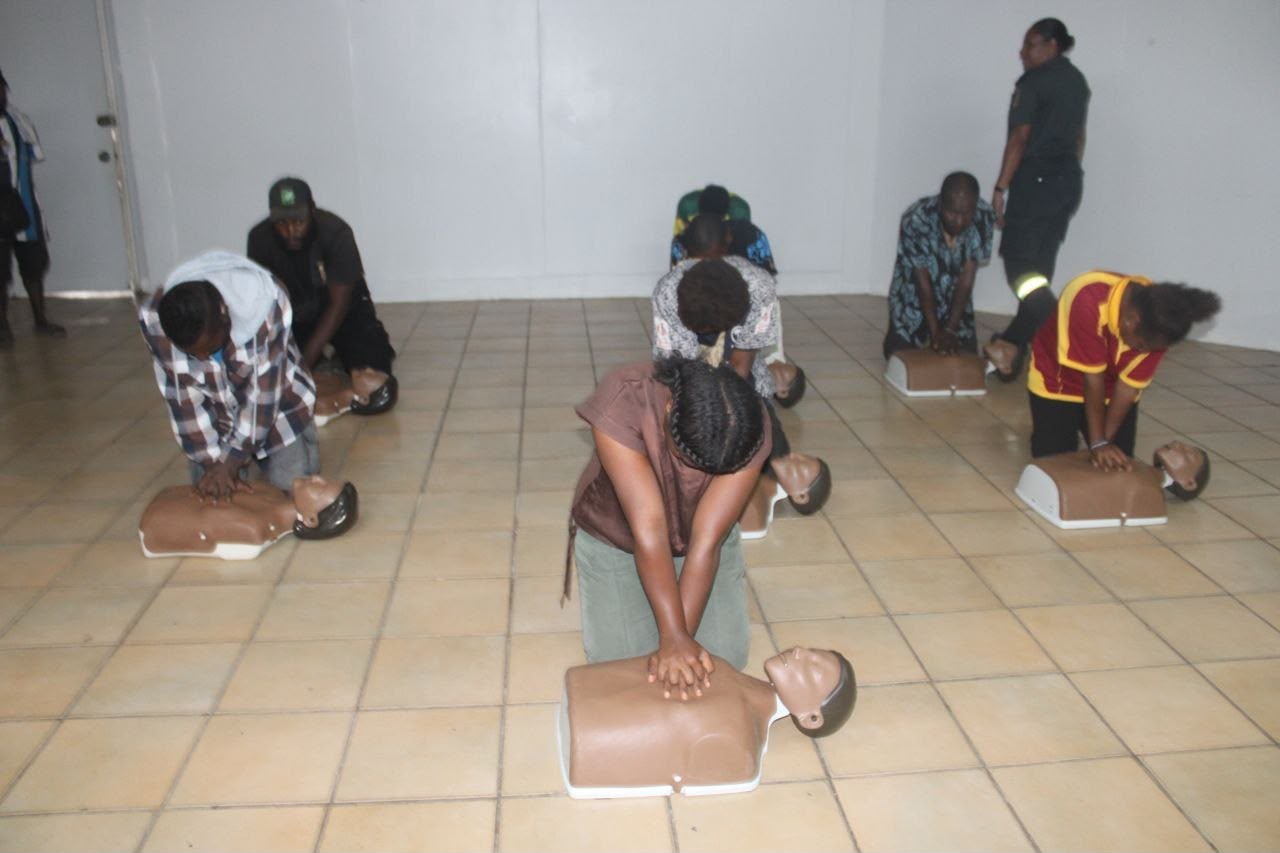
NATIONAL St John Ambulance (NStJA) is encouraging communities to continue learning lifesaving skills following World Restart a Heart Day activities held in Port Moresby, Lae and East New Britain.
The awareness activities, which concluded on Friday, 16 October, helped participants develop the skills and confidence to recognise a possible cardiac arrest, call for emergency assistance, perform cardiopulmonary resuscitation (CPR) and use an automated external defibrillator (AED), where available.
NStJA First Aid Training Manager Joannah Mea said cardiac arrest occurs when the heart suddenly stops pumping blood effectively. A person who is unresponsive and not breathing normally needs immediate CPR.
She explained that CPR helps maintain blood flow to the brain and other vital organs while emergency assistance is on the way. Early CPR and prompt use of an AED, when available, can improve a person’s chance of survival.
Knowing what to do during these critical minutes can make a lifesaving difference.
NStJA is encouraging people to learn CPR and encourage others to do the same, helping build communities where more people are prepared to respond when someone collapses.
Observed annually on 16 October, World Restart a Heart Day raises awareness of cardiac arrest and the importance of bystander CPR. While the campaign provides a focus for public awareness, these skills matter every day.
NStJA’s participation builds on its ongoing work to strengthen emergency preparedness through workplace, school and community first aid training.
From January to August 2026, 2,754 people from 139 organisations, businesses and the wider community participated in NStJA’s First Aid Training Program. Six different courses were delivered, allowing organisations to select training suited to their workplace risks and operational needs.
Through the First Aid in Schools Program, funded by the Sir Brian Bell Foundation, a further 2,939 students received training by the end of the third quarter of 2026, bringing the program close to its annual target of 3,000 students. An additional 165 people participated in community first aid training.
These figures represent thousands of people who are better prepared to assist family members, colleagues and others during an emergency.
The National St John Ambulance Council thanks everyone who participated in the.awareness activities and those who continue to invest in learning first aid.
Learning these skills today could help save a life tomorrow.