


By WASITA ROYAL
THE Chairman of the National Fisheries Authority (NFA) Board, Laurie William, has revealed that discussions on the proposed East New Britain Development Corporation (ENBDC) have already begun at the wharf. This is significant news. It signals that the vision of establishing a Papua New Guinean-owned fishing industry is moving beyond an idea, with preliminary discussions already underway.
The question now is whether East New Britain can turn these discussions into investment, policy and concrete action before the opportunity slips away.
East New Britain has demonstrated its commitment to the overseas employment programme, which provides opportunities for Papua New Guineans to work abroad.
Provincial Administrator Levi Mano confirmed that the programme has now been incorporated into provincial and district budgets. This is a positive development, giving local people opportunities to earn wages, acquire skills and build savings.
However, it raises a bigger question: If we can send our young people overseas to find employment, why can’t we create similar opportunities for them here at home?
The answer may lie in our ocean. More specifically, it may lie in our tuna resources.
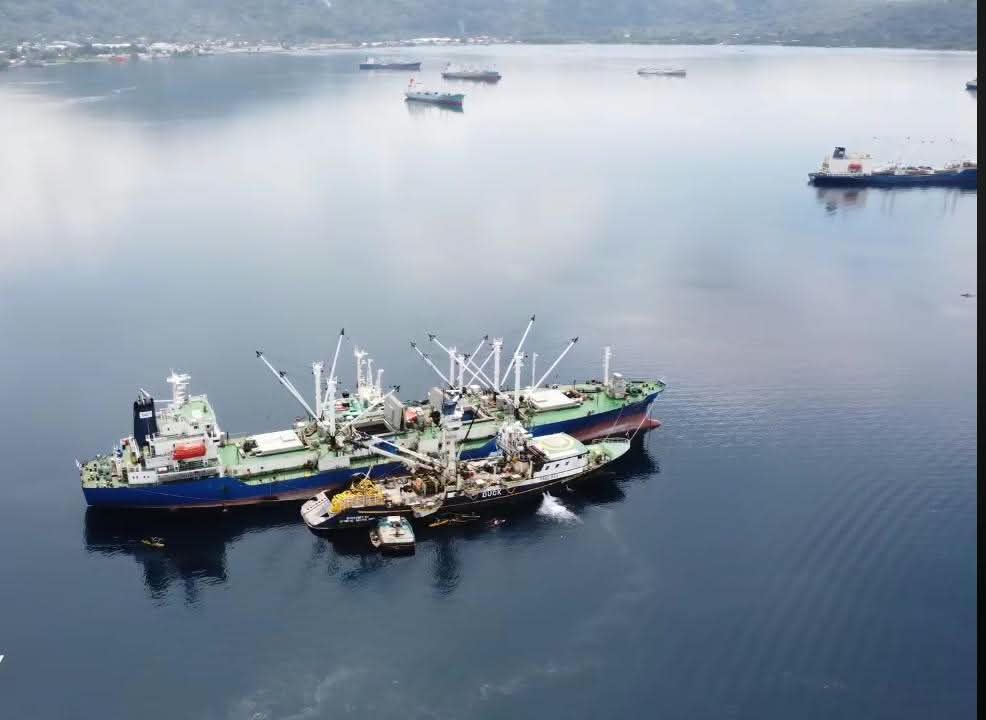
Papua New Guinea controls access to extensive tuna fishing grounds in the Pacific. Yet much of the tuna harvested in our waters is caught by foreign fishing vessels, processed elsewhere and sold in international markets. Meanwhile, our people watch from the shore as much of the economic value generated by these resources leaves the country.
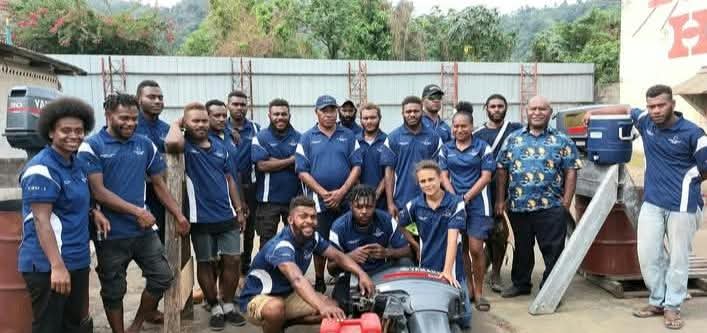
A proposal emerging from discussions among East New Britain leaders presents a straightforward but ambitious vision: PNG should own fishing vessels, employ its young people and provide them with competitive wages, potentially paid in US dollars. Under the proposed arrangement, crew members could work at sea for three months, take two weeks of rest and then return to work.
This is more than a job creation initiative. It is an opportunity to build a locally owned industry, generate business revenue and strengthen the provincial economy.
It could also help address some of the social challenges facing our communities. Providing young people with meaningful employment, a reliable income, discipline and practical skills can give them greater purpose and reduce their vulnerability to law and order problems.
For this vision to become reality, the East New Britain Provincial Government must play an active role. It should provide investment support and help establish viable businesses through a revived ENBDC. Securing the appropriate fishing licences and developing local capacity could position PNG as a stronger player in the Pacific tuna industry.
William has made it clear that there is no legal barrier preventing Papua New Guineans from entering the tuna fishing business. However, he cautioned that the industry requires substantial financial investment and cannot be treated as a small business venture.
A new purse seine fishing vessel can cost approximately USD 20 million, while a second-hand vessel may cost between USD 8 million and USD 10 million. These figures do
not include the additional costs of fuel, crew, fishing nets, cold storage, maintenance, insurance and other operational requirements.
The industry is already dominated by established Japanese, Filipino and Taiwanese operators. Many of these companies come from families with 40 to 50 years of experience in fishing. They have developed fleets, processing facilities, established buyers and strong international market connections.
Therefore, a new PNG-owned company would not simply be purchasing a fishing vessel. It would be entering a highly competitive global industry supported by decades of investment, experience and established commercial relationships.
This does not mean PNG cannot compete. Rather, it means we must enter the industry with a clear understanding of what is required. We need sufficient capital, reliable business partners, technical expertise and a long-term investment strategy. Hope and good intentions alone will not be enough.
Over the past three to four years, the NFA has made policy changes aimed at increasing local participation and strengthening PNG ownership in the fisheries sector. These
priorities include PNG-owned businesses, local crew employment, onshore processing and genuine joint ventures with Papua New Guinean investors.
This is encouraging progress, but the NFA cannot achieve these objectives alone.
William emphasised that all relevant government agencies must work together to create an enabling environment for local investment.
The Departments of Finance and Treasury must help provide access to affordable capital and appropriate tax arrangements. Lands and Transport must support access to wharves, ports and other essential facilities. Labour and Immigration must facilitate crew training and ensure that permit and visa arrangements for technical experts who train local workers are practical and efficient.
Similarly, Energy and Infrastructure must support the provision of reliable electricity, water and cold-storage facilities. Commerce must encourage viable local joint ventures, while provincial governments must provide the necessary onshore support.
Other agencies, including the National Maritime Safety
Authority (NMSA), Customs, Immigration and port authorities, must also coordinate their responsibilities to ensure efficient vessel operations and compliance with safety requirements.
The message is clear: If government agencies continue working in isolation, local participation will remain a policy statement on paper. But if they work together, it can become a practical reality.
Lessons from PNG’s Previous Longline Fishing Industry
William also highlighted the history of PNG’s longline fishing industry, which experienced significant growth during the late 1990s and early 2000s.
At its peak, the industry had more than 100 to 150 licensed vessels, most owned by Taiwanese, Japanese and Filipino companies. Only a small number were owned by PNG operators.
Despite its initial growth, the industry eventually declined.
Operating costs were high, management and regulatory controls were weak, and most vessels depended on foreign ownership and financing. As a result, PNG largely benefited
from licence fees rather than retaining a significant share of the industry’s wider economic value.
There was also a lack of supporting infrastructure. The country did not have a strong onshore processing base, reliable cold-chain facilities or adequate wharf services. Fishing vessels often had to transship their catches at sea or travel to Fiji, Pago Pago or the Philippines to access necessary services.
The rapid issuance of fishing licences also placed pressure on monitoring and enforcement capacity. As market conditions changed, these weaknesses made the industry increasingly difficult to sustain.
Ultimately, PNG’s longline fishing industry collapsed.
Other regional fishing centres, including Fiji, Pago Pago and the Philippines, continued operating. However, recent industry reports indicate that Fiji’s longline sector is also experiencing a slowdown, driven by rising operational costs and lower albacore prices.
Why PNG Must Develop Its Own Tuna Model
William used Fiji’s experience to illustrate why PNG must develop a fishing model suited to its own resources and
market opportunities rather than simply copying another country’s approach.
Fiji built much of its longline industry around albacore tuna. Its business model involved processing the fish into higher-value products for canning, packing and bottling, which could then be sold through retail markets, including in the United States.
That model relies heavily on onshore processing facilities. It does not necessarily require the same ultra-low-temperature freezing systems or rapid airfreight arrangements needed for premium fresh fish markets.
PNG’s circumstances are different.
The country’s longline fishery has a strong focus on yellowfin tuna, whose highest-value markets include the sashimi and sushi trade. This has encouraged a different business model based on freezing fish at sea and exporting it to premium international markets.
Modern freezer vessels can freeze yellowfin and bigeye tuna at extremely low temperatures, preserving their quality for shipment to markets such as Japan, South Korea and the United States.
According to the NFA Chairman, this approach offers a more suitable commercial pathway for PNG’s tuna resources than simply replicating Fiji’s albacore-based processing model.
The challenge, therefore, is to build an industry around PNG’s competitive strengths and the requirements of its target markets.
A New Approach to Reviving Longline Fishing
The NFA is now seeking to revive PNG’s longline fishing industry, but William stressed that it must not repeat the mistakes of the past.
The new approach will focus on fewer licences, stronger regulation and greater accountability. In other words, the industry must operate under a limited-entry system rather than allowing unrestricted access.
Prospective operators must demonstrate that they have sufficient capital, the capacity to comply with regulations and genuine PNG participation in their businesses.
PNG ownership will be a priority. This means favouring genuinely PNG-owned vessels and joint ventures in which local investors hold meaningful equity, rather than arrangements that provide only nominal local participation.
Vessels will also be expected to land their catches, undertake transshipment and access servicing facilities through PNG ports wherever required under the applicable arrangements. This will help retain more economic activity, employment and business opportunities within the country.
Modern freezer vessels will be preferred because they can target the high-value sushi and sashimi markets. Older fresh-fish vessels may struggle to compete in this market due to their limitations in preserving fish quality.
The NFA also recognises that rebuilding the industry requires coordinated support from other government agencies, including NMSA for maritime safety, Customs and Immigration for regulatory processes, port authorities for efficient vessel turnaround and financial institutions for access to investment capital.
William said the objective is to establish a modern, sustainable longline industry suited to PNG’s circumstances: targeting yellowfin tuna for the premium sushi market, freezing the catch at sea, bringing economic activity through PNG ports and ensuring genuine PNG ownership.
Fiji has demonstrated the importance of processing and adding value to fisheries products. PNG must now focus on the economic value of owning and controlling more of the fishing and freezer chain.
East New Britain Must Act on the Opportunity
The NFA Board Chairman has confirmed that there is support for the proposed ENBDC, with discussions already taking place at the wharf. The Fisheries Minister is also supportive, while the broader policy environment is increasingly favouring PNG ownership, local crew employment and onshore processing.
These developments present East New Britain with an important opportunity.
The question remains: Will East New Britain seize this moment?
The overseas employment programme is valuable and should continue to be supported. However, it cannot be our only pathway to economic opportunity.
We cannot continue relying solely on sending our young people overseas for employment while foreign fishing vessels harvest tuna from our waters and capture much of the wealth generated by those resources.
Our people must become participants in our own economy, not spectators.
East New Britain has the opportunity to turn its fisheries resources into a foundation for local business ownership, employment, skills development and long-term economic growth.
But this will require more than political statements and expressions of support. It will require strong provincial leadership, serious investment, sound business planning, effective partnerships and cooperation across all levels of government.
The tuna is part of our national wealth. Our ocean is one of our greatest economic assets. But ownership of these resources alone does not guarantee prosperity. We must have the capital, knowledge, infrastructure and determination to turn them into lasting benefits for our people.
East New Britain has a chance to lead this transformation.
This is not simply another development proposal. It is an opportunity to build an industry, create jobs for our young people and ensure that more of the wealth generated from PNG’s fisheries remains in PNG.
The opportunity is here. The discussions have started. Now
East New Britain must decide whether it is ready to act.
There is no better time than now.