


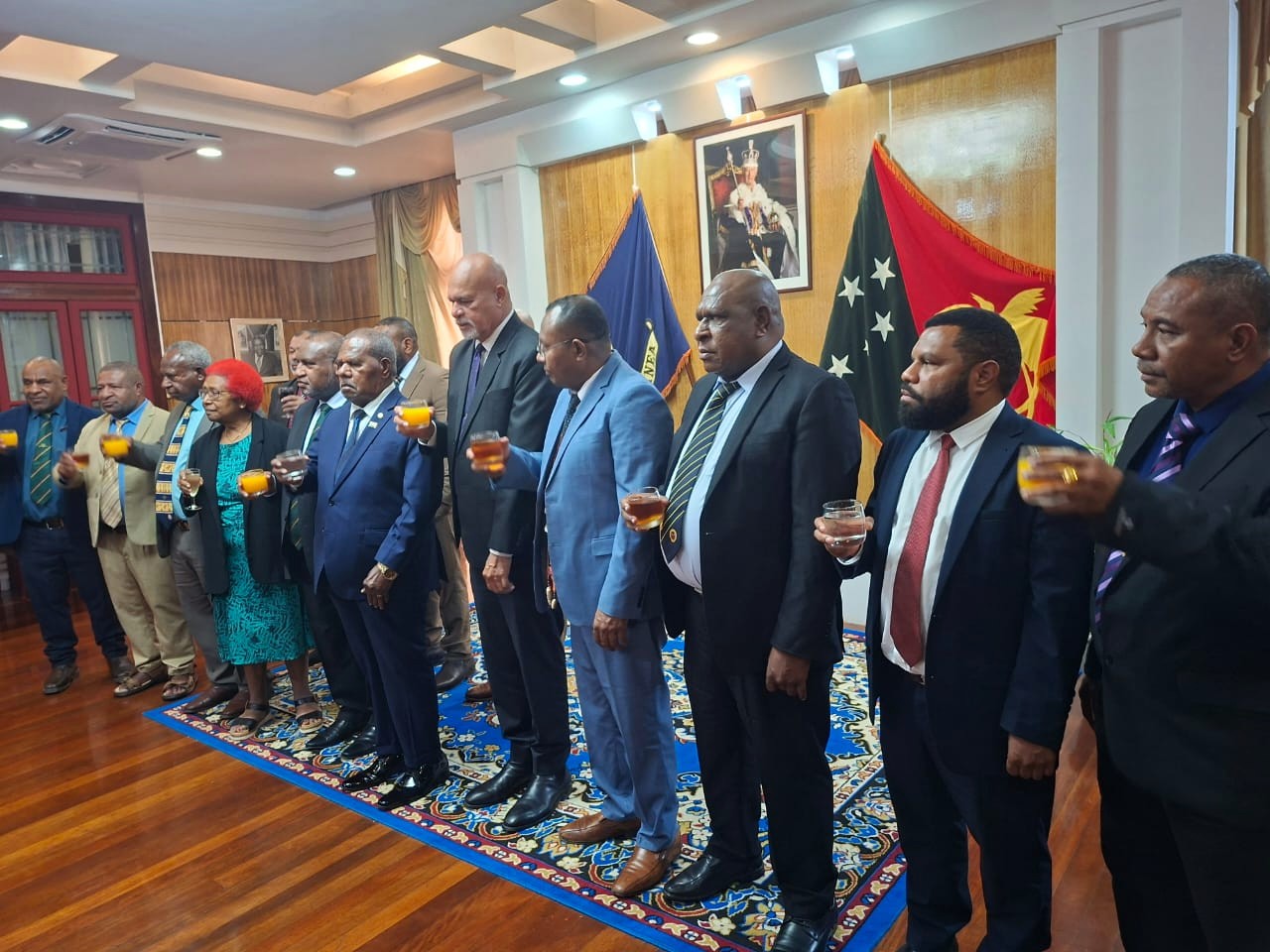
Prime Minister James Marape has today announced a major Cabinet reshuffle, appointing new ministers and reallocating several key portfolios as the Government positions itself for the remainder of the parliamentary term.
The new ministerial appointments and portfolio changes are:
Hon. Douglas Tomuriesa – Minister for Civil Aviation
Hon. Francis Kikin – Minister for Education
Hon. Saki Soloma – Minister for Labour
Hon. John Kaupa – Minister for Environment
Hon. Robert Naguri – Minister for Information and Communications Technology (ICT)
Hon. Agena Ganai – Minister for Livestock
Hon. Richard Maru – Minister responsible for PNG Power (new portfolio responsibility)
Hon. Duma – Minister for State Enterprises
Hon. William Bando – Minister for Immigration
Hon. Wake Goi – Minister for Commerce (following the suspension of Win Daki)
Hon. Elias Kapavore – Minister for Defence
Hon. Dr. Billy Joseph – Minister for Health
Hon. Miki Kaeok – Minister for Coffee
Prime Minister James Marape will retain responsibility for Correctional Services, Sports, and the National Volunteer Service (NVS).
The reshuffle introduces several new faces into Cabinet while making substantial changes to key portfolios, including assigning a dedicated minister to oversee PNG Power, signalling the Government’s commitment to addressing challenges in the country’s electricity sector.
The reshuffle is expected to place the right leaders in key portfolios to strengthen Government performance and deliver strongly through to the end of the current term of Parliament.
Reshuffling created unstability of this government since, and many bigger infrastructure worth millions not taking shape in tha country,
Corruption is the development seen , heard felt and faced ,,
A reality
fact
There seems to be a growing trend of creating numerous ministerial portfolios. In my view, this raises concerns about whether these appointments are genuinely intended to improve governance or whether they are part of a strategy to strengthen political support ahead of the 2027 National General Election.
Another concern is the financial cost. Establishing and maintaining additional ministries requires millions of kina for salaries, offices, staff, vehicles, and other administrative expenses. These funds could instead be directed toward essential services and development projects such as roads, schools, hospitals, and rural infrastructure.
I believe the timing is also worth questioning. With the national election approaching next year, it is reasonable for citizens to ask whether these decisions are driven by the country’s long-term interests or by political considerations. As citizens, we should encourage transparency, accountability, and policies that prioritize national development over political advantage.
Comments are closed.