


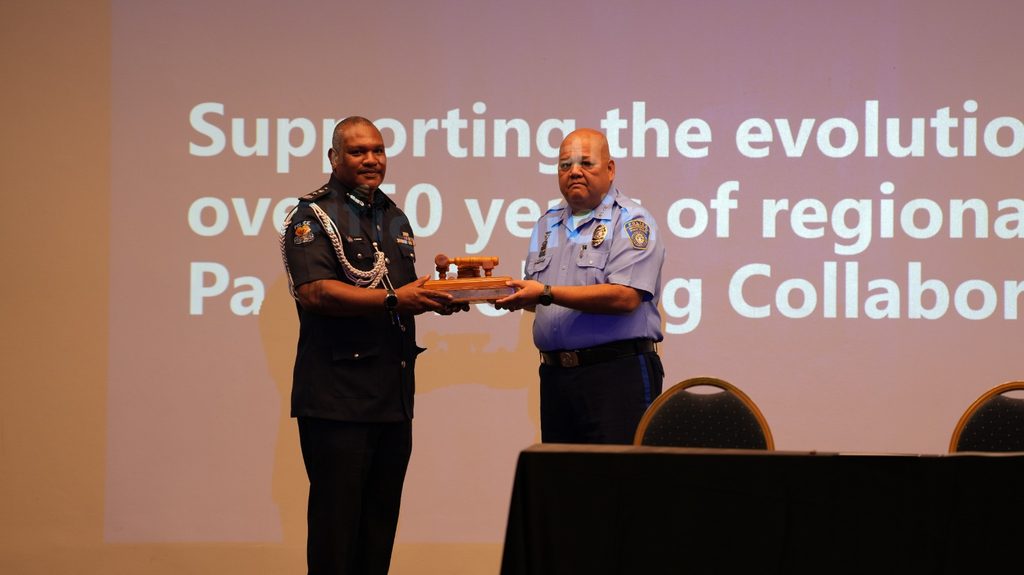
Papua New Guinea has taken a leading role in strengthening regional security and combating international organised crime following the appointment of Police Commissioner David Manning as the inaugural Chairman of the newly established Pacific Policing Community (PACPOL).
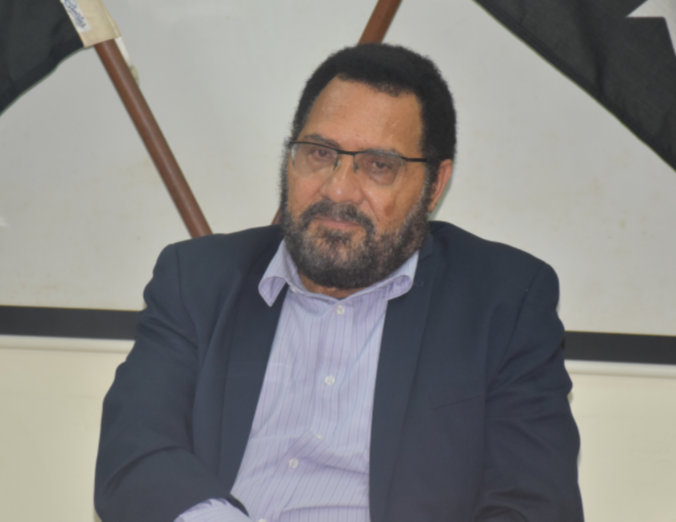
Minister for Police and Internal Security, Hon. Sir John Thomas Pundari, has welcomed the establishment of PACPOL, describing it as a major milestone for regional policing cooperation and a significant vote of confidence in the leadership of the Royal Papua New Guinea Constabulary (RPNGC).
In a statement released today, October 15, Minister Pundari said Commissioner Manning’s election demonstrated the trust Pacific police chiefs have placed in Papua New Guinea to lead regional efforts against transnational criminal networks.
“Pacific Police Chiefs have placed their trust in our RPNGC leadership under Commissioner Manning at a defining time for our region,” Sir John said.
“Commissioner Manning’s election as the first PACPOL Chair is a mark of the confidence our Pacific neighbours have in the RPNGC. Papua New Guinea is proud to lead, and we will lead in partnership with our regional and international partners.”
Sir John said the establishment of PACPOL would strengthen intelligence sharing, joint police operations, training and capacity building among Pacific Island countries.
He said international criminal syndicates involved in illicit drugs, firearms trafficking and other serious crimes posed growing threats to regional security and required a united response.
“No country, be they big or small, can take on the international criminal syndicates on their own and come out on top,” he said.
“Criminal networks do not stop at borders, and neither can we. PACPOL gives the Pacific a single platform to share expertise, build capability and work with our partners to disrupt and dismantle the networks behind illicit drugs and firearms.”
The Minister said Papua New Guinea was already contributing to regional policing cooperation through the Bomana Centre of Excellence, where police personnel from other Pacific countries are being brought together for training and professional development.
He said the new policing community would further strengthen these partnerships and provide greater opportunities for coordinated operations against organised crime.
Sir John also acknowledged Australia’s continued support for policing initiatives across the Pacific, particularly through the Australian Federal Police.
He stressed that PACPOL would remain a Pacific-led initiative, ensuring that regional policing priorities reflected the needs and sovereignty of Pacific Island nations.
“PACPOL is driven by the Pacific, in collaboration with like minds in the Australian Federal Police. These are Pacific-led policing solutions that protect our sovereignty in Pacific Island countries and Australia,” he said.
The Minister said PACPOL would bring together the Pacific Islands Chiefs of Police (PICP) and the Pacific Policing Initiative (PPI) under one regional policing structure.
A single Chiefs Leadership Board will replace the separate governance arrangements, while the existing PPI Hub in Australia and the PICP Secretariat will transition into the PACPOL Hub and PACPOL Secretariat.
Sir John said the establishment of the organisation represented the culmination of more than 56 years of regional policing collaboration.
He also called on Pacific governments to provide the political support necessary to strengthen cooperation and ensure the initiative achieves its objectives.
“We have to work jointly to get at the criminals who commit the most heinous crimes across many of our countries,” he said.
“No longer can we let the criminals see the Pacific as easy targets, because we are working together and we have strength in our shared beliefs and culture.”
PACPOL was formally established during the 53rd Pacific Islands Chiefs of Police Conference held on October 14, 2026, in the Commonwealth of the Northern Mariana Islands.
The establishment of PACPOL, with Papua New Guinea assuming its inaugural chairmanship, marks a significant step towards stronger regional law enforcement cooperation and a coordinated Pacific response to international organised crime.