


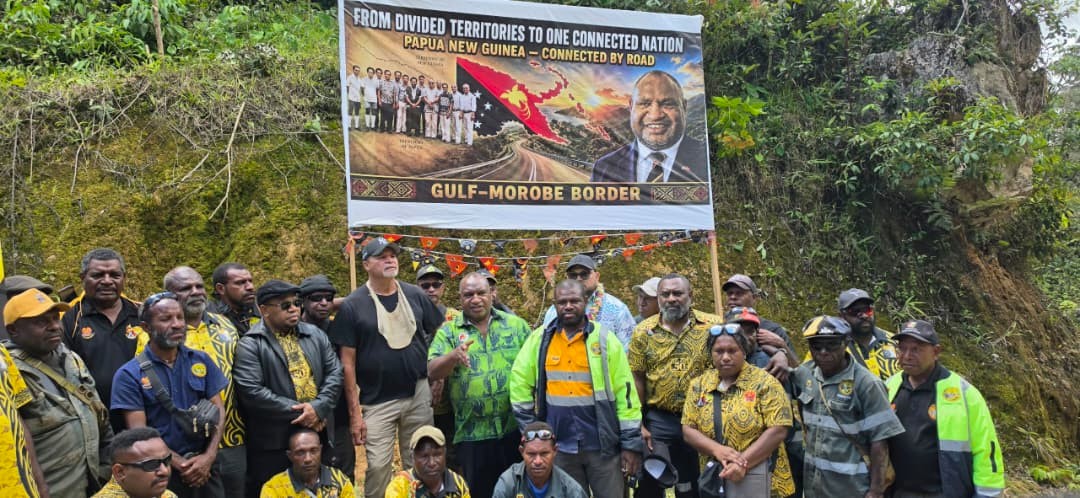
DEPUTY Prime Minister and Minister for Lands, Physical Planning and Urbanisation John Rosso says the newly cut pilot road linking Kerema and Lae represents more than a major infrastructure project — it represents the opening of access, opportunity and basic government services to thousands of Papua New Guineans who have waited decades to be connected to the rest of the country.
Mr. Rosso made the remarks following a historic road journey with Prime Minister James Marape, travelling from Port Moresby through Central, Gulf and Morobe provinces before completing the journey in Lae City.
The journey provided the leaders with a first-hand opportunity to see the progress of the road, meet communities along the route and hear directly from people whose lives are expected to change because of the new road access.
At Kaintiba, Mr. Rosso told local communities that the road gives them the right and the opportunity to participate in the development of their own country.
“For 50 years since Independence, many of our people in these remote communities have continued to live without the same level of access to basic government services that many of us take for granted. Now, this road will begin to change that.” Rosso said.
He said improved road access would make it easier for people to reach health facilities, schools, markets, government offices and other essential services, while also creating opportunities for farmers, businesses and communities to participate in the wider economy.
Mr. Rosso said the most powerful part of the trip was not the machinery or the scale of the construction, but the people they met along the way.
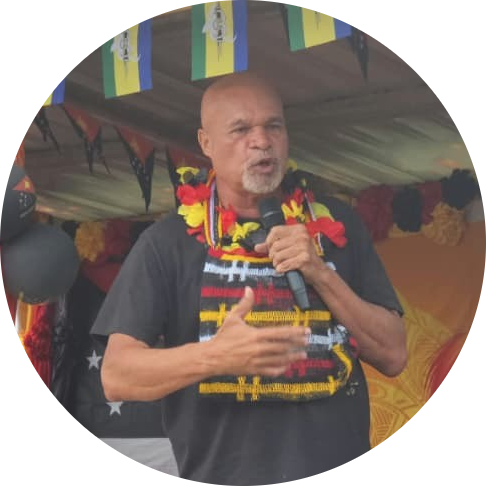
He acknowledged the many men, women and children who came out to welcome them, often walking long distances and waiting for hours simply to see the leaders and express their gratitude.
“There were people who welcomed us with tears of joy and happiness. That tells you what this road means to them. These are people who have been waiting for connectivity and access for generations.” Rosso said.
He said the emotional response from communities demonstrated that infrastructure must ultimately be measured by the difference it makes in people’s lives.
The Deputy Prime Minister commended the Department of Works and Highways, its engineers, technical officers, contractors, machinery operators and support staff who have worked on the project.
He said the public often saw only the finished road, but did not always see the difficult conditions, technical challenges and long hours faced by the people responsible for delivering major infrastructure in some of the country’s most challenging terrain.
“I want to thank the Department of Works and every single member of the team who has contributed to this project. Our engineers, our technical people, our contractors, our machine operators and all the workers on the ground deserve recognition.” He said.
Mr. Rosso said the Government must continue to invest in technical expertise and build the capacity of Papua New Guineans to plan, design, construct and maintain the country’s infrastructure.
The Deputy Prime Minister also issued a strong challenge to social media commentators who criticise major government infrastructure projects without understanding the technical work involved. He said Papua New Guineans had every right to question government decisions and demand accountability, but criticism should be informed by facts.
“If you are not an engineer, if you have never designed a road, if you have never constructed a road, if you have never worked on a major infrastructure project, then do your research before you go on social media and tell the country how a road should be built,” he said.
He stressed that he was not opposed to criticism or public scrutiny. “Ask questions. Hold Government accountable. That is your right. But get your facts right first.”
He said social media had become an important platform for public discussion, but misinformation and uninformed commentary could undermine public understanding of major national projects.
“We cannot build this country through Facebook and social media commentary alone. We build this country through knowledge, engineering, planning, hard work, investment and people who are prepared to get their hands dirty and do the work.”
He encouraged commentators to engage with technical information and seek expert advice before making claims about engineering, road construction and other specialized areas.
Mr. Rosso reflected on the significance of completing the journey and returning to the city that he represents. He said the trip had provided a powerful reminder that PNG’s development must not be measured only by what happens in Port Moresby or other major centres.
“Papua New Guinea is bigger than our cities. Our people in the rural areas deserve roads.
They deserve schools. They deserve health services. They deserve access to government. They deserve the opportunity to participate in the economy.” The Deputy Prime Minister said.
Mr. Rosso said the Kerema-Lae road journey demonstrated what could be achieved when Government agencies, technical professionals, workers and communities worked together towards a common national objective.
He said the project also reflected the broader vision of Reset@50, as Papua New Guinea moves beyond its first 50 years of Independence and looks towards the next 50.
“We have completed 50 years as an independent nation. Now
we must ask ourselves what kind of country we want to build for the next 50 years,” he said.
“The next 50 years must be about changing our mindset, improving our infrastructure, strengthening our institutions and making sure development reaches our people —
wherever they live.”
Mr. Rosso said the road journey was therefore not simply a trip from one city to another.
“It was a journey through the lives of our people. We saw their challenges, we heard their stories and we saw their hope.”
He said the Government would continue to work towards a PNG where geography did not determine whether a citizen could access basic services or economic opportunities.
“Today we are cutting a road. Tomorrow that road will carry children to school, mothers to health centres, farmers to markets and businesses to new opportunities.”
“That is what development is about. It is about giving our people a better future.” Rosso concluded.