


By Pita Ligaiula
LOS ANGELES, (PACNEWS)-The United States has announced more than US$44 million in new security programmes for the Pacific, including investments in maritime surveillance, drug interdiction, border security and investigations into transnational crime.
The commitments were announced at the inaugural U.S-Pacific Islands Conference of Police Ministers (COPMIN), held in Los Angeles on 21– 22 October, bringing together Pacific police ministers and senior officials, regional organisations and security partners from Australia, New Zealand and France.
The United States says the funding will target criminal networks involved in drug trafficking, money laundering, cybercrime and illegal fishing, while strengthening law enforcement cooperation across the Pacific and the Western Hemisphere.
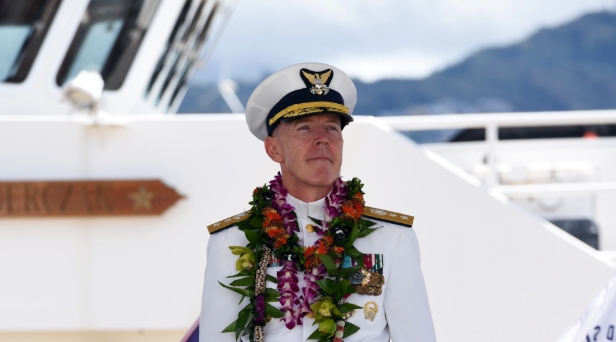
U.S. Coast Guard Commandant Admiral Kevin Lunday and Palau Justice Minister Jennifer Olegeriil co-chaired the conference.
Among the major commitments are US$7 million for a regional maritime law enforcement training and coordination centre in Palau, nearly US$5.5 million for a regional maritime awareness network, and US$4.5 million for Project Kanaloa to strengthen maritime enforcement capabilities.
The maritime awareness programme includes more than US$1.4 million in surveillance tools for the Pacific Islands Forum Fisheries Agency (FFA) and Fiji’s maritime services, as well as a secure communications system for the Pacific Transnational Crime Coordination Centre, hosted by Samoa.
The United States will also construct a boat ramp in Fiji to support efforts to intercept illicit drugs and cargo.
Papua New Guinea’s National Fisheries Authority(NFA) will receive equipment for four new patrol boats, including electro-optical and infrared cameras, upgraded radar displays and real-time data transmission systems.
The U.S Coast Guard will also expand bilateral Shiprider operations, allowing Pacific law enforcement officers aboard US Coast Guard cutters to enforce their own countries’ laws within their exclusive economic zones.
The funding also includes US$5 million for the Enhancing Police Investigative Capacity programme, which will support investigations into drug trafficking, bribery, money laundering and cybercrime.
A further US$5 million will strengthen Pacific financial intelligence and cybercrime units through the Pacific Alliance for Combating Illicit Finance and Cybercrime programme. Training will cover cryptocurrency tracing, beneficial ownership investigations and digital forensics.
The United States has allocated approximately US$3.5 million to strengthen border detection in Tonga, including cargo screening equipment at Queen Salote International Wharf in Nuku’alofa and support facilities for canine detection operations in Vava’u.
Other commitments include US$4 million for the Regional Interdiction Partnership for Trafficking Intelligence, Disruption, and Enforcement, which will link police services through INTERPOL and the World Customs Organisation to improve information sharing and connect drug seizures with investigations into criminal finances.
The United States will also provide US$2.5 million for border and port security through the FORTRES programme, more than US$1.3 million for investigator training in Fiji, Tonga, Palau, the Marshall Islands and the Federated States of Micronesia, and US$450,000 for narcotics investigation training and mentorship through the Pacific Islands Narcotics Supply Reduction programme.
An additional US$5 million will support Pacific police academies through the INSPIRE programme, focusing on curriculum development, instructor standards, recruitment and technical assistance.
At the conference, the United States and Palau also signed a Letter of Agreement to strengthen law enforcement training and capabilities, with regional programming potentially extending to the Marshall Islands and the Federated States of Micronesia.
The U.S State Department said the programmes were intended to address criminal networks operating across multiple regions, including those moving narcotics through the Pacific and laundering proceeds through international financial systems.
The department said participants had committed to strengthening maritime surveillance, port and border security, protecting legitimate supply chains and improving investigations into scams, cryptocurrency laundering and corruption.
The United States said it would work with Pacific partners to continue the initiatives into 2027 and beyond, arguing that regional security was closely linked to economic stability and prosperity…..PACNEWS