


By DALCY LULUA
The Government has officially launched the National Monitoring and Coordination Authority (NMCA), a new statutory body tasked with strengthening the oversight, evaluation, and coordination of national development projects and government programs.
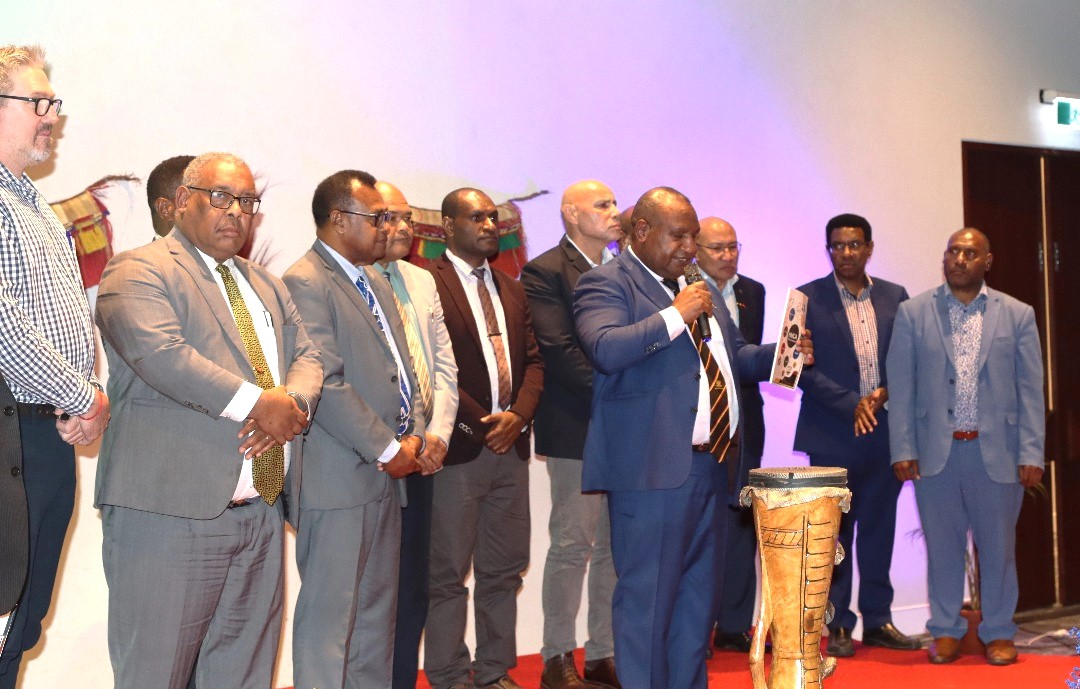
The launch ceremony, held in Port Moresby yesterday, was officiated by Prime Minister James Marape, and graced by ministers, heads of government departments, senior public servants, and development partners..
Mr Marape said the NMCA represented a critical step in ensuring government policies and initiatives are implemented effectively and deliver tangible results to citizens.
“The establishment of the NMCA is part of our government’s commitment to accountability and performance,” he stated. “This Authority will monitor, track, and report on the progress of key programs and investments to ensure every kina spent delivers value for our people.”
“Anchored in the Government’s commitment to address weak implementation, disjointed oversight, and poor service delivery – as highlighted in successive reviews and reinforced in the 40-Year Review by the National Research Institute – this framework represents a decisive shift from policy rhetoric to institutional actions,” Mr Marape said,
Northern Governor and Chairman of the Parliamentary Committee on Public Sector Reforms and Service Delivery, Gary Juffa, highlighted the urgent need for better oversight of government spending.


Gov Juffa called for sweeping structural reforms across Papua New Guinea’s public service, urging a full forensic audit and a “hard reset” in how the country delivers development.
Speaking during the launching, Acting Chief Secretary and NMCA board chairman, Ivan Pomaleu, said the launch also marked the introduction key policy documents which outline the operational framework of the authority.
“This policy clearly describe how the NMCA will function, from monitoring and evaluation processes to reporting and coordination mechanisms,” Mr Pomaleu said. “It will guide the Authority’s work in aligning government priorities with on-the-ground delivery.”
The policy framework sets out:
●The purpose, mandate, and guiding principles of the NMCA
●The interim governance and management structures
●The core functions and operating model
●A performance-based approach to planning, budgeting, and implementation monitoring
●And an integration plan to align all sectors and stakeholders under a unified monitoring and coordination system
The Prime Minister emphasised that the success of the NMCA will depend on cooperation across all levels of government, and he urged public servants, provincial leaders, and stakeholders to fully engage with the authority’s work.
The NMCA will begin operations immediately once the pending enactment of enabling legislation is done. It will operate under the DPMNEC using the delegated powers and functions and sanctioned by the National Executive Council.
The NMCA will operate as the central agency for project oversight, working closely with government departments, provincial administrations, and development partners to improve service delivery.
Its responsibilities include real-time monitoring of project milestones, coordinating between agencies to address delays, and producing regular public reports to promote transparency with priority focus areas including infrastructure rollouts, social sector programs, and major resource projects.