


By Orchy Rex
Leaders from Papua New Guinea, the United Nations and the Republic of Korea have reaffirmed their commitment to ending sorcery accusation-related violence (SARV), describing it as one of the country’s most pressing human rights issues.
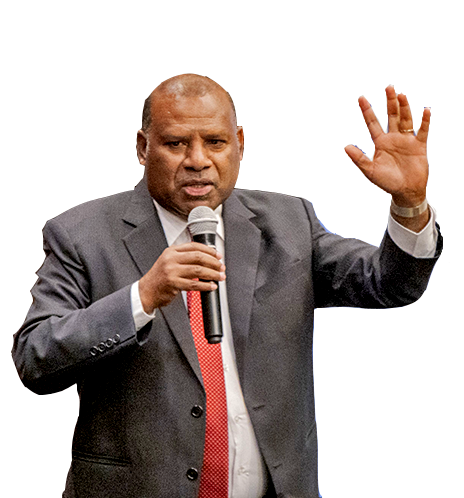
Speaking at the National Dialogue on SARV in Port Moresby today, Secretary for the Department of Justice and Attorney General, Dr Eric Kwa, acknowledged the burden the justice sector has faced in combating the crisis.
“We feel powerless to do anything,” Dr. Kwa admitted. “I go to sleep many, many times feeling that maybe we’ve not done enough. And what else can we do?”
He described the devastating toll SARV has had on communities, saying, “Every time when you see these stories, it just basically cracks your heart in terms of the way that our people are dealing with this matter.”
Despite this, Kwa praised grassroots leaders, saying, “These are the silent heroes that I think we should celebrate… the face of the rule of law, the face of peace, the face of unity in our communities.”
UN resident coordinator Richard Howard said SARV remained a top priority for the United Nations in PNG, especially following the recent brutal killing of Rosa Yacobos in Hela Province.
“This incident laid bare two sides in Papua New Guinea. One of which was the brutal violence filmed and spread on local media, and the other, the immediate wave of outrage that insisted such cruelty had no place in modern Papua New Guinea,” Howard said.
Mr Howard emphasized that awareness alone was not enough. “We might say that this goal is largely accomplished, yet people are still being tortured and murdered which begs the question: what comes after awareness?”
He added that community transformation is critical: “At the end of the seven-week program, 90 percent of respondents said that ‘sanguma’ (evil spirit) is false, it is a lie, it is a rumor and we should not believe it.”
He said the UN would continue its preventive engagement through three pillars, health, education, and justice.
“Protecting women, persons with disabilities, children and older persons requires strong coordination, sustained funding and the courage to act on evidence.”
Meanwhile, Ambassador of the Republic of Korea, Choi Jon Ho, said his country was proud to stand with PNG in addressing this violence.
“This violence, often rooted in fear, inequality and misinformation, continues to harm some of our most vulnerable citizens,” he said.
“It tears at the social fabric of PNG and undermines the rights, safety and dignity of its people.”
“The government of Korea has donated 5 million U.S. dollars through the UNFPA for three years to solve this SARV and gender-based violence problem.”
The ambassador called the partnership between PNG, Korea and the UN “a model of what international collaboration can achieve,”
“It reflects the understanding that SARV is not simply a domestic issue. It is a universal concern, and it demands a universal and international response.”
He reaffirmed Korea’s support for PNG’s fight against SARV. “Let us ensure that dignity, justice, and peace prevail in every province, every village, and every home.” NCDC Governor Powes Parkop, Moresby North-West MP Lohia Boe Samuel, Oro Governor Gary Juffa and other government dignitaries were also present at the dialogue.