


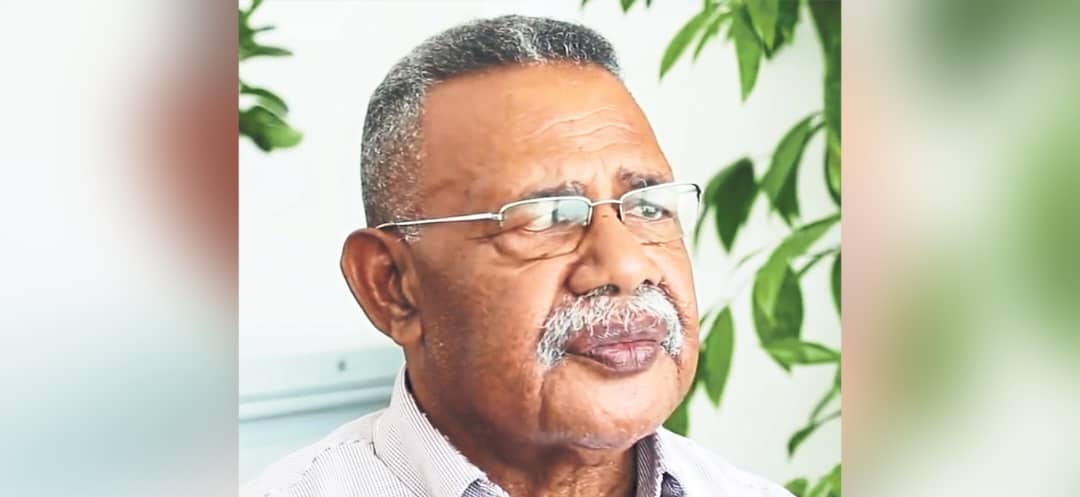
An analysis by Major General JERRY SINGIROK
The Papua New Guinea Defence Force was established by the Australian government post Second World War in 1947-51 based on a brigade size light infantry unit consisting of two infantry battalions and later incorporated the naval element with five attack class patrol boats and air element to support movement of troops and equipment. It was mandated in 1975 by the Constitution under Section 202 to carry out its roles and functions. They are:
Defend Papua New Guinea and its territory.
Assist in international obligations.
Provide assistance to civilian authorities during civil disasters and restoring public order and security under the Call out in aid to civil power provisions in Section 204.
Perform as directed functions and services of civic nature , nation building and development within and outside in accordance the Constitution and acts of parliament.
The Constitution lays down four principals roles for the Defence Force. The first relates to the defence and sovereignty and by extension the protection of Papua New Guinea’s national interest whenever it may be threatened. The second it provides for a role in respect of regional and collective security and Defence Treaty and International obligations, the deployment of the Defence Force in civil emergency under Section 204 and last its employment in nation building and development.
Sufficient provisions are already provided in the Constitution to enable training and cooperation with other forces in Section S.206 of the Constitution deals with Visiting Forces Agreements. All Foreign Forces who wish to visit PNG and involve in military activities should be covered by a municipal law or an Act of Parliament.
By having an Act of Parliament, the provisions can be tailored to accommodate concessions to courts and tribunals, preferences, allowances, the acts of conceding to all or some civil and criminal matters in their respective jurisdictions. PNG has a visiting force act which referred to as Defence (Visiting Forces) Act 1975.
It has general application in that all foreign forces are subject to PNG Laws. S.11 grants exclusive jurisdiction to a foreign country. However, such exclusive jurisdiction must contain specific clauses in the agreements. This is to ensure that the Constitution is not offended by the activities of a foreign country. S.13 gives concurrent jurisdiction to both PNG and a foreign country. This enables flexibility for both States to work together especially where it comes to dealing with foreign military personnel involvement in civil and or criminal offenses. (Ben Lomai)
Signing Defence Pack with Australia for the purposes of strengthening our military capacity and capabilities is most welcomed, but an Act of Parliament must give legal effect to whatever military activities a foreign country intends especially when foreign forces are incorporated and absorbed into our combat structure for combat role and operations. This is the issue of contention.
Sovereignty Protection
The first priority for any Defence Force is to provide the government’s front-line response in the event of territorial incursion, resource poaching, acts of terrorism, armed piracy, drug running, illegal arms smuggling, peoples smuggling and other infringement of sovereignty that goes beyond the capacity of RPNGC. Infringement of sovereignty requires the Defence Force to response as it may be necessary to use lethal means to neutralize and suppress breach of national security.
The Defence Force therefore require timely response using at its disposal platforms and capabilities to respond. The capabilities listed are; suitable equipment, ocean-going vessels, air platforms to deploy and provide aerial surveillance, mobility, resupply and sustain ground troops .
The characteristic required by these assets include appropriate mobility, firepower, tactical and strategic communications system, supported by robust command and control, surveillance and intelligence network.
On-going sovereignty protection include regular patrols, routine surveillance, presence of foot soldiers along our international land border to provide presence and deterrence as part of the overall responsibility of sovereignty protection.
Under regional and collective security agreements there have been opportunities for Papua New Guinea Defence Force to operate with limited support in aerial surveillance and most recently the Sea Raider Agreement where maritime assets used with Australia and USA. Otherwise the overall protection of our international borders and maritime space have been left unattended due to unavailability of capabilities.
Retarded and Stagnated Papua New Guinea Defence Force
The Papua New Guinea Defence Force (PNGDF) has faced longstanding challenges and neglect by series of governments that have hindered its ability to fully carry out its constitutional duties. Major breakdown of the key factors contributing to its limited effectiveness: They are:
Under-funding and Budget Constraints: The PNGDF has historically suffered from inadequate funding, which affects equipment, infrastructure, and personnel development. Only .38% GDP is spent on Defence and has never increased in Defence spending.
Limited Manpower: With a relatively small force (historically around 2,000–3,000 personnel), PNGDF struggles to cover vast maritime and land borders, respond to internal security threats, and participate in international peacekeeping.
Aging Equipment and Infrastructure: Much of the military hardware is outdated, and logistical support systems are underdeveloped, limiting operational readiness.
Lack of Clear Operational Doctrine: The force has struggled to define its role in a modern security environment, often caught between traditional defence duties and domestic law enforcement support.
Weak Civil-Military Coordination: PNGDF’s integration with other national security agencies has been inconsistent, affecting its ability to respond to crises effectively.
Leadership and Discipline Issues: Internal discipline and leadership standards have been cited as areas needing reform, with efforts now underway to instill stronger accountability and professionalism.
Security Fragility: PNG’s vast geography and porous borders make it vulnerable to illegal fishing, smuggling, and transnational crime, which the PNGDF is often ill-equipped to counter.
Dependence on External Support: The force has relied heavily on partnerships, especially with Australia, for training, equipment, and strategic guidance. While helpful, this dependence has sometimes exposed gaps in self-reliance.
Recent initiatives aim to reverse these trends:
Pukpuk Defence Treaty with Australia: The Pukpuk Treaty promises to expand PNGDF’s manpower to 7,000 and create a 3,000-strong reservist unit, with up to 10,000 Papua New Guineans eligible to serve under joint arrangements.
Strategic Vision 2022–2026: The PNGDF is undergoing reforms focused on people, organizational structure, operational proficiency, infrastructure, and nation-building.
In essence, PNG’s in in the process of offloading its sovereign responsibilities to protect its national interest and sovereign to Australia to fill the gaps and carry. This move while from face value appeals has serious consequences from dependency to strategic synergy and blatant disregard to sovereignty at the expense of Australia.
Sir Warren Dutton recently said:
“In short, the PNGDF’s ineffectiveness stems from a complex mix of historical neglect, resource limitations, and strategic ambiguity. However, current reforms and international partnerships signal a concerted effort to transform the force into a more capable and constitutionally aligned institution. Indirectly the Papua New Guinea government has given second fiddle to its own Defence Force and allowed Australia to take over some parts of the Defence Force.
For fifty years, PNG has struggled to grow out of dependence on Australia, yet instead of charting its own course like vibrant Asian neighbors. PNG is now being drawn back into Canberra’s orbit. This treaty systemically integrates PNG Defence Force into Australia’s security objectives. It is no longer about protecting PNG’s people; it is about safeguarding Australia’s strategic interests in the Pacific.
Dutton said; “ Let’s be honest: if our Defence Force is trained, funded, and deployed under Australian priorities, then whose sovereignty are we defending? Ours—or theirs? You cannot compromise the defence of your country by allowing a dominant former colonial power to dictate its direction. At this rate, we might as well dissolve our Constitution and Parliament and formally become a free association of Australia, like Niue and the Cook Islands with New Zealand, or Guam under the United States”.
Dominic Senge’s Analysis describes Pukpuk Treaty as Progressive Ruse in Military Strategy
“A ruse de guerre (French: “trick of war”) is an accepted military tactic involving deception to mislead an adversary. A progressive ruse goes beyond a single feint: it is incremental deception over time, where one small move sets the stage for another, conditioning the target into compliance without perceiving the trap until it is too late.
Characteristics of a Progressive Ruse as Incremental Steps: Small, seemingly harmless or cooperative actions that normalize foreign presence. It includes Psychological Conditioning: Each step makes resistance harder, as it seems “too late” or “already agreed.” It promotes False Threat Framing: Convincing the target of an exaggerated or external threat, so it welcomes foreign intervention as “protection.” and leads to gradual entrapment: By the time the real strategic objective becomes clear, the target state has already ceded access or control.
Senge said: “ Pukpuk Treaty was the completion of the double ruse strategy by Washington and Canberra perceived as threat from the north. In 2018 APEC Summit in Port Moresby U.S. Vice President (Mike Pence) bluntly declared to PM Peter O’Neill: “I want Manus.”
Manus since 1942 offered the most strategic base to fill the geographical gap needed to consolidate the tyranny of distance between 7th Fleet in Hawaii and Australia in respect of threat from the north then. It is strategically logical once again now to build up Manus as the threat collectively perceived now by USA and Australia is China.
Regardless of how best the Papua New Guinea government want to justify the integration of a foreign force our Constitution does not currently provide for military integration with a foreign power. The PNG Defence Force (PNGDF) is mandated to serve the sovereign interests of PNG first.
Any arrangement that embeds PNGDF personnel within the Australian Defence Force (ADF) or aligns PNG’s military doctrine with Australia’s could be seen as Undermining national sovereignty, violating the principle of non-alignment, which PNG has historically upheld.
By-passing parliamentary scrutiny, if not properly debated and ratified. If Pukpuk Treaty is signed without constitutional amendments or broad public consultation, it could be challenged in court or spark political backlash and in the long term Papua New Guinea will be subjected to Australia’s generosity , manipulation and control.
ABOUT MAJOR GENERAL JERRY SINGIROK
A career infantry officer who joined the PNG Defence Force in 1975 and rose through the ranks to become Brigadier General in 1995 and promoted to Major General in 1999. Served in First and Second Battalion Pacific Islands Regiment. A graduate of Australian Command and Staff College in Military Strategy and Science. Degree in Management Studies. Visiting Fellow at ANU and Lecturer in Tactics and Manoeuvre Warfare Land Warfare Centre Canungra. He was discharged in 2002.