


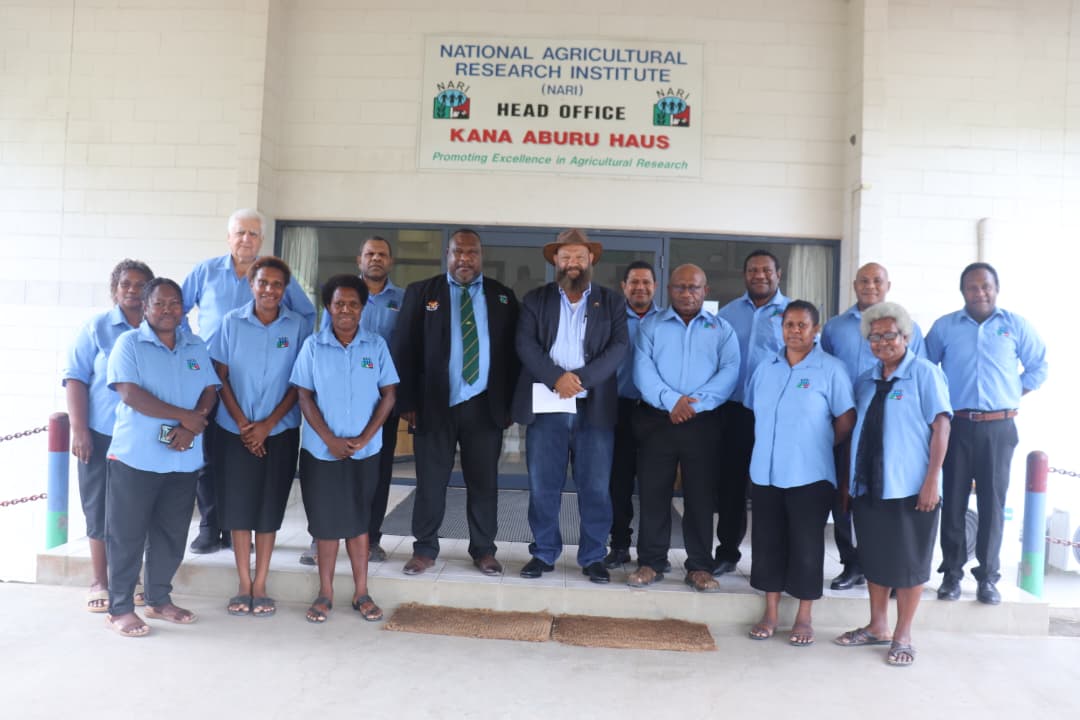
Minister for Agriculture John Boito has called on all agricultural institutions to submit their 2025 financial reports, stressing the need for accountability to secure increased government funding for the sector.
Mr Boito made the call during a visit to the National Agriculture Research Institute (NARI) headquarters in Bubia, Lae, yesterday, marking the commencement of his official ministerial duties for the year.
The Minister commended NARI management and staff for the transformation currently underway following an institutional review, noting that the reforms were critical to strengthening agricultural research in the country.
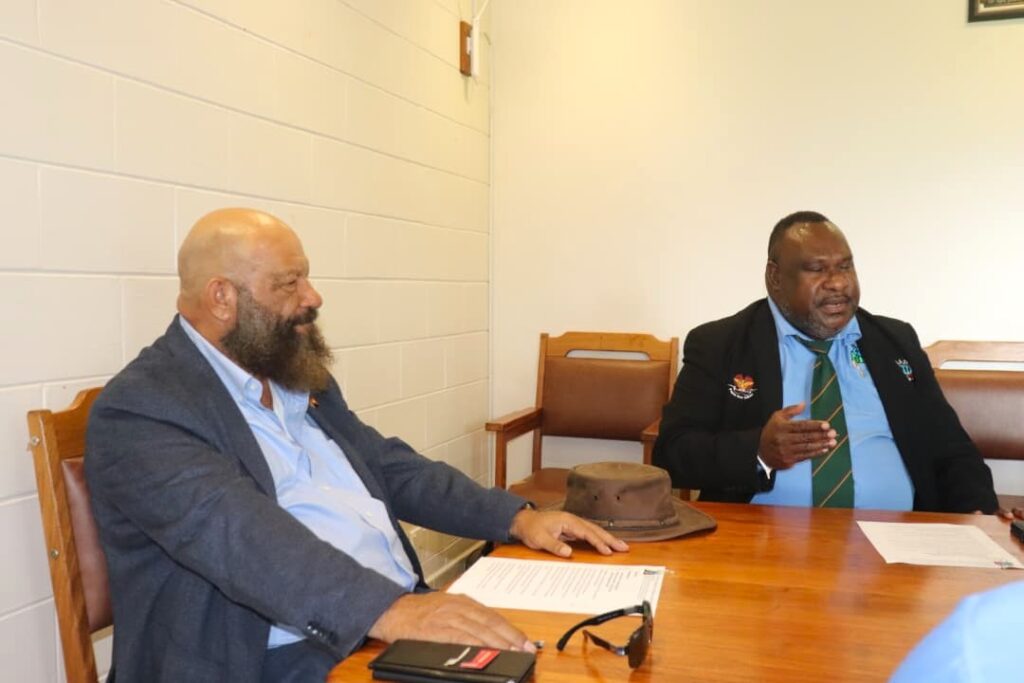
“It is encouraging to see NARI undertaking major institutional reviews to transform the agricultural research space,” Minister Boito said.
“I commend the management for coordinating the National Agriculture Research Systems Policy Framework and aligning its strategies with the National Agriculture Sector Plan and MTDP IV.”
He echoed Prime Minister James Marape’s Reset@50 agenda, emphasizing the need to shift farmers from subsistence agriculture to commercial production to grow the economy.
While acknowledging the dedication of NARI staff in implementing the National Agriculture Sector Plan, Minister Boito urged all agricultural institutions, including NARI, to furnish their 2025 financial reports to his office.
“If we show the results of the money given to the agriculture sector in 2025, then we can receive more funding support from the government going forward,” he said.
“We need to demonstrate that public funds entrusted to our sector are being used appropriately.”
The Minister reiterated that all agriculture-related institutions must align their operational plans with the National Agriculture Sector Plan and begin delivering measurable results.
Minister Boito was received by NARI Director General Dr Nelson Simbiken and senior staff, who welcomed the Minister’s continued support for the institute.
Dr Simbiken described NARI as the technical backbone of the agriculture sector, highlighting the importance of research data in shaping development and policy.
“Everything we do in the agriculture sector boils down to data to inform development and policy,” Dr Simbiken said.
“We are grateful for Minister Boito’s support over the past three years, which has ensured consistency in our budget. This demonstrates his commitment to advancing the Marape–Rosso agriculture policy.”
With sustained government support, NARI has initiated projects across its regional centers, strengthened partnerships with donor agencies, and begun recruiting specialist researchers to boost its capacity.
These initiatives aim to improve agricultural productivity, strengthen climate resilience, and enhance food security in PNHG.