


Papua New Guinea’s Position on the Escalating US–Iran Conflict
We, the Papua New Guinea Flag Officers League (FOLA) and the Papua Islands Regiment Veterans League (PIRVL), speak today not as political actors, but as strategic planners and practitioners, servants of the state who have sworn an oath to defend the sovereignty, security, and well being of Papua New Guinea and its people. It is in that spirit that we address the Government and citizens of Papua New Guinea in the face of a rapidly escalating global crisis.
I. THE SITUATION: OPERATION EPIC FURY AND ITS GLOBAL CONSEQUENCES
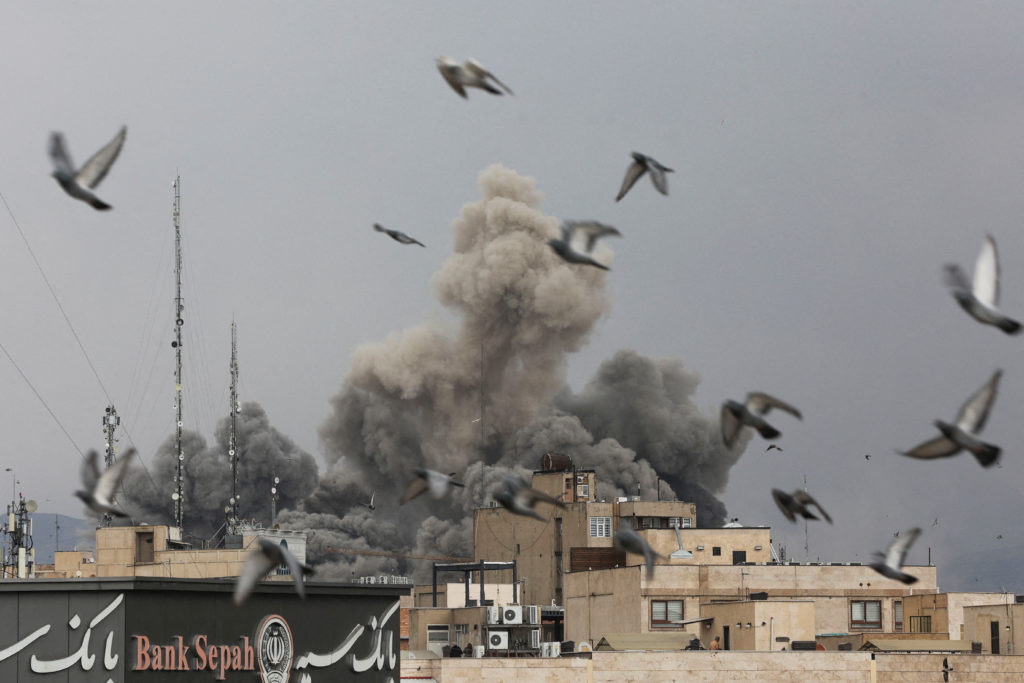
On 28 February 2026, the United States and Israel launched a coordinated military campaign against Iran — designated Operation Epic Fury. As of today, the conflict is in its fourth day. Iranian Supreme Leader Ayatollah Ali Khamenei has been confirmed dead following strikes on his Tehran compound. Iranian forces have retaliated with nearly 400 ballistic missiles and 800 drones targeting US military installations in Qatar, Kuwait, Bahrain, and the UAE, Israel, as well as civilian infrastructure including hotels in Dubai and the US Embassy in Riyadh.
The conflict has already widened. Israel and Hezbollah have exchanged strikes in Lebanon. The Strait of Hormuz — through which approximately 20% of the world’s petroleum supply transits — is effectively closed. Brent crude has surged to USD 83 per barrel. European natural gas prices have doubled in 48 hours. Major international airports across the Gulf . Dubai, Abu Dhabi, Bahrain, and Kuwait have been damaged or closed. Hundreds of thousands of travelers, including over 115,000 Australians, are stranded worldwide. From our information this includes some Papua New Guineans. US President Trump has estimated the campaign could last four to five weeks, or potentially far longer.
From a military standpoint, this conflict presents characteristics of a rapid decapitation strike followed by sustained war of attrition. The depletion of air defence interceptor stocks across the Gulf within days is a critical vulnerability. Once interceptor magazines are exhausted, population centers and infrastructure become exposed. The introduction of Israel’s Iron Beam directed-energy system signals a new phase in air defence doctrine, but it cannot alone compensate for regional magazine depletion. The risk of miscalculation, friendly fire already evident in Kuwait and horizontal escalation into Southeast Asia is real and growing.
II. THE LEGAL DIMENSION: AN OPERATION WITHOUT MANDATE
We speak plainly as militarily strategists where we studied and lectured, “ The Art of War” and collectively over 150 years of service to our nation. Operation Epic Fury was launched without authorization from the United Nations Security Council. It apparently violates Article 2(4) of the UN Charter, which prohibits the use of force against the territorial integrity or political independence of any State. The United States has not issued a formal Congressional Declaration of War as required under the US Constitution. Multiple US Senators including Bernie Sanders, Elizabeth Warren, and Ed Markey have described the campaign as an illegal war of choice, conducted without Congressional authorization.
The international community has responded with alarm. The United Nations and multiple non-aligned states have condemned the initial strikes as undermining regional stability and setting a dangerous precedent one in which future disputes between powerful states are resolved with missiles rather than diplomacy. Germany, France, and the United Kingdom have declined to endorse the operation, calling instead for a return to negotiations.
Papua New Guinea’s own Constitution, in its preamble, commits this nation to the principles of international cooperation, peaceful resolution of disputes, and respect for the sovereignty of all nations. Our constitutional identity is therefore directly engaged by this crisis not as a distant observer, but as a sovereign State whose founding law demands a principled response.
III. PNG’S STRATEGIC EXPOSURE: THE LOMBRUM FACTOR
Papua New Guinea is not insulated from this conflict. The Lombrum Naval Base on Manus Island — HMPNGS Tarangau — has been refurbished for over USD135m as a joint PNG-Australia-United States facility, officially reopened in August 2025. The United States is currently investing over USD 16 million in new facilities there, with a broader US security commitment to PNG valued at over USD 864 million over ten years. These are facts on the ground that carry strategic weight with a strategic intent as a military transit and operational base for threats in the South West Pacific and South East Asia.
Iran has already demonstrated the will and capability to strike any nation hosting US military assets. Gulf Cooperation Council countries despite their geographic proximity to Washington’s allies — have suffered strikes on their bases and civilian infrastructure. While Papua New Guinea is geographically distant, the principle of escalation to a global ‘war of bases’ cannot be dismissed if this conflict broadens further. The Government of Papua New Guinea must ensure clearly and publicly that Lombrum, Komo , Jacksons and Nadzab airfields or any other facility on our sovereign soil is not being used, directly or indirectly, as a staging ground for active combat operations in this or any related theatre.
This Statement is not an anti-American position. It is a pro-Papua New Guinea position based on national interest and sovereignty. Our bilateral security partnerships are valued and must be maintained. But they must never be permitted to compromise our sovereign control of our own territory, or to draw our nation into a conflict that is not ours to fight.
IV. OUR POSITION: NEUTRALITY IS NOT SILENCE. IT IS STRATEGY
Since Independence in 1975, Papua New Guinea has stood upon the principle of ‘Friends to All, Enemies to None.’ This is not a passive posture. It is a deliberate sovereign strategy one forged by our founding fathers and enshrined in our national identity. Today, that principle is more urgent than ever.
Neutrality means that we do not endorse the targeting of civilian infrastructure, schools, hospitals, or the deliberate decapitation of a foreign government regardless of who carries it out or what justification is offered. We have witnessed in our own living rooms the images of children in rubble and families torn apart. No strategic objective, however articulated, balances the moral weight of innocent lives. Leaders who direct such operations and leaders who silently endorse them or openly seem to condones regime change bear a shared responsibility before history and before their own peoples.
At the same time, neutrality does not mean indifference to the global consequences. Rising fuel costs will strike directly at Papua New Guinea’s transport sector, fisheries, agriculture, and rural communities. Disrupted shipping lanes threaten import supply chains. The surge in LNG prices may benefit PNG’s export revenues in the short term, but commodity volatility is not a foundation for national development planning.
V. OUR CALL TO THE GOVERNMENT OF PAPUA NEW GUINEA
We respectfully but firmly call on the Marape /Rosso Government and the National Parliament to take the following positions without delay:
- Issue a formal public statement of Papua New Guinea’s position of neutrality and non-alignment in the US–Iran conflict, consistent with our Constitution and the ‘Friends to All, Enemies to None’ doctrine.
- Confirm publicly that no facility on PNG sovereign territory including Lombrum Naval Base or airports are being used as a staging ground for offensive combat operations in this conflict.
- Engage the Pacific Islands Forum (PIF) to coordinate a collective Pacific voice calling for immediate ceasefire, the reopening of international shipping lanes, and a return to diplomatic negotiation framed as a matter of global economic security and Pacific well being.
- Direct the PNG Defence Force and relevant intelligence agencies to assess and report on the security implications of the conflict for PNG’s sovereign installations, maritime zones, airspace and supply chains.
- Prepare economic contingency measures for sustained fuel price increases, supply chain disruption, and potential inflation flowing from the Strait of Hormuz closure.
- Call on all parties to the conflict including the United States, Israel, and Iran to immediately halt strikes on civilian infrastructure, comply with international humanitarian law, and engage in UN-mediated dialogue.
VI. A WORD TO THE CITIZENS OF PAPUA NEW GUINEA
To the people of Papua New Guinea our soldiers, veterans, families, and communities we say this: you are not powerless in the face of great power conflict. Our nation’s voice matters. Our sovereignty matters. Our values matter.
History has shown, repeatedly, that smaller nations caught in the crossfire of superpower rivalry pay the heaviest price not the leaders who launch the missiles, but the communities whose economies collapse, whose young men are recruited into others’ wars, and whose futures are mortgaged to strategic calculations made in distant capitals.
Papua New Guinea sits at a strategic crossroads of US and China’s competition in the Pacific. We are not a stepping stone. We are a sovereign Melanesian nation with our own dignity, our own interests, and our own pathway. We must walk that path with our eyes open, our principles intact, and our voice clear.
The world is watching the Pacific. Let us ensure that what it sees is a nation of conscience, courage, and strategic wisdom.