


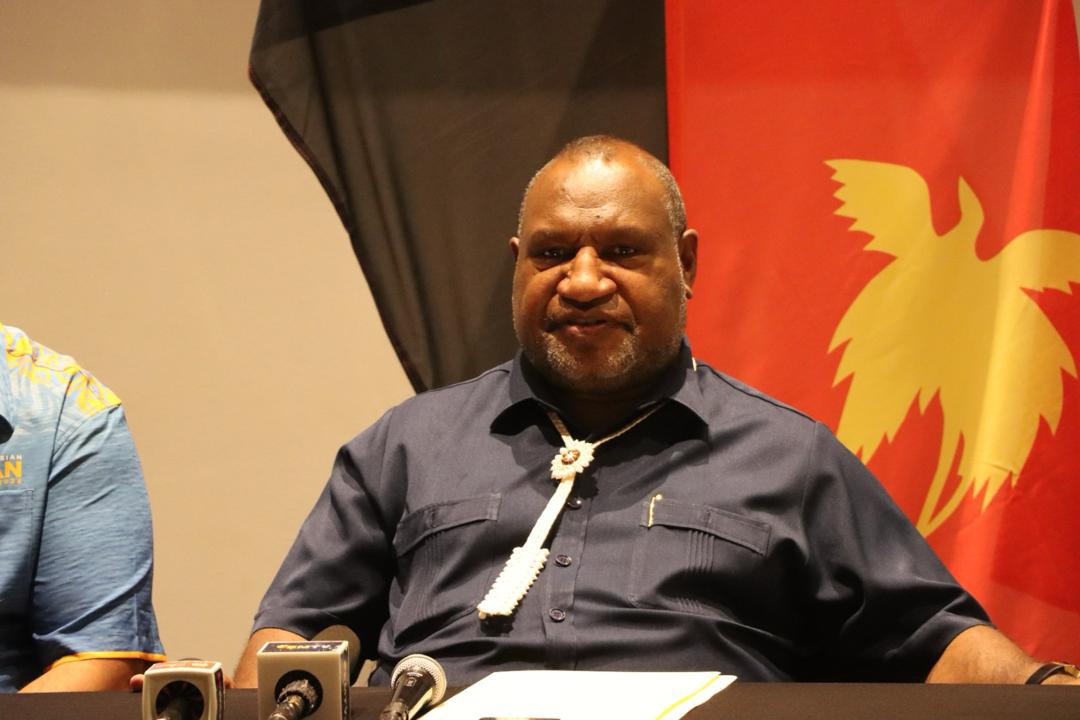
PRIME Minister James Marape says today’s Supreme Court ruling dismissing the constitutional challenge against Section 145(5) of the Constitution is a landmark affirmation of Papua New Guinea’s constitutional order, parliamentary democracy, and political stability.
Prime Minister Marape said the Supreme Court’s detailed judgment clearly confirmed that Constitutional Amendment No. 48 (Motions of No Confidence) Law 2025 was validly enacted and consistent with the broader intent and structure of the Constitution.
“The Court has now made it absolutely clear that Section 145(5) is constitutional and consistent with the spirit of responsible government envisioned by our Constitution,” Prime Minister Marape said.
“This decision is not merely about one political case or one Prime Minister. James Marape will not be here forever. This amendment is for the long-term stability of Papua New Guinea and for future governments that will continue to benefit from this law, just as we continue to benefit from good laws passed before us.”
Prime Minister Marape said Papua New Guinea’s own political and economic history clearly demonstrated the importance of stable governments.
“In the first 27 years of our nationhood, from 1975 to 2002, Papua New Guinea changed governments 13 times. During that period, economic growth was slow,” he said.
“In the last 23 years, when the country had only three Prime Ministers, our economy experienced its fastest growth. These are historical facts tied directly to political stability and continuity in government.”
The Supreme Court ruled that many of the issues raised by Opposition Leader Hon. James Nomane had already been addressed in earlier Supreme Court decisions, particularly the Bird case and the earlier Nomane case, making the present application without merit.
The Court found that the applicant was not raising any new significant constitutional issues and that the application had “no reasonable prospect of succeeding”.
Prime Minister Marape noted that the judgment strongly reaffirmed Parliament’s constitutional authority to amend laws relating to votes of no confidence, provided such amendments remain within constitutional limits.
“The Court recognised that Parliament has a legitimate responsibility to ensure governments are given a reasonable opportunity to govern and implement the mandate given by the people,” he said.
“The judges acknowledged that constitutional stability is itself an important democratic value.”
The Supreme Court specifically reaffirmed earlier findings that Constitutional Amendment No. 48 does not create an entirely new 36-month grace period, but instead preserves the existing constitutional protection under Section 145(4) while preventing repeated and disruptive motions of no confidence after an unsuccessful attempt.
Prime Minister Marape said the amendment did not remove the constitutional right to move a vote of no confidence, which remained an important democratic safeguard.
“The safety mechanism remains fully intact,” he said.
“If the majority of leaders no longer have confidence in a Prime Minister, the constitutional process for removal remains available. The people’s right at election time also remains the strongest and safest mechanism for changing governments.”
He said the amendment instead sought to discourage unnecessary political disruption and instability caused by individuals who lacked majority support but created public division and uncertainty.
“This law preserves the check-and-balance mechanism while discouraging endless political manoeuvring andbdissension that can damage the country,” Prime Minister Marape said.
“We have already seen the dangerous consequences of instability and public disorder, including events such as January 10, 2024.”
The judgment also reaffirmed the constitutional principle of collective responsibility under Section 141, which makes the Executive Government accountable to the people through Parliament. The Court held that measures promoting stability in government are consistent with that constitutional framework. Prime Minister Marape said the Court’s findings recognised the realities of governance in Papua New Guinea.
“Our country needs stable governments capable of delivering long-term development programmes, major infrastructure projects, economic reforms, and investor confidence,” he said.
“Political instability has historically weakened service delivery and distracted governments from nationbuilding.”
The Supreme Court further held that the present proceedings amounted to an abuse of process because the applicant was attempting to relitigate issues that had already been decided by the Court in earlier proceedings.
Prime Minister Marape said the ruling demonstrated the
importance of respecting judicial finality and constitutional consistency.
“The judiciary has once again acted independently and responsibly to protect the integrity of our constitutional system,” he said.
“I thank the Supreme Court for its wisdom and clarity in interpreting the Constitution.”
Prime Minister Marape urged all political leaders to respect the decision and focus their energies on national development priorities.
“As we celebrate Papua New Guinea’s 50th anniversary, this ruling provides further certainty and confidence for our democracy, our economy, and our future.”