


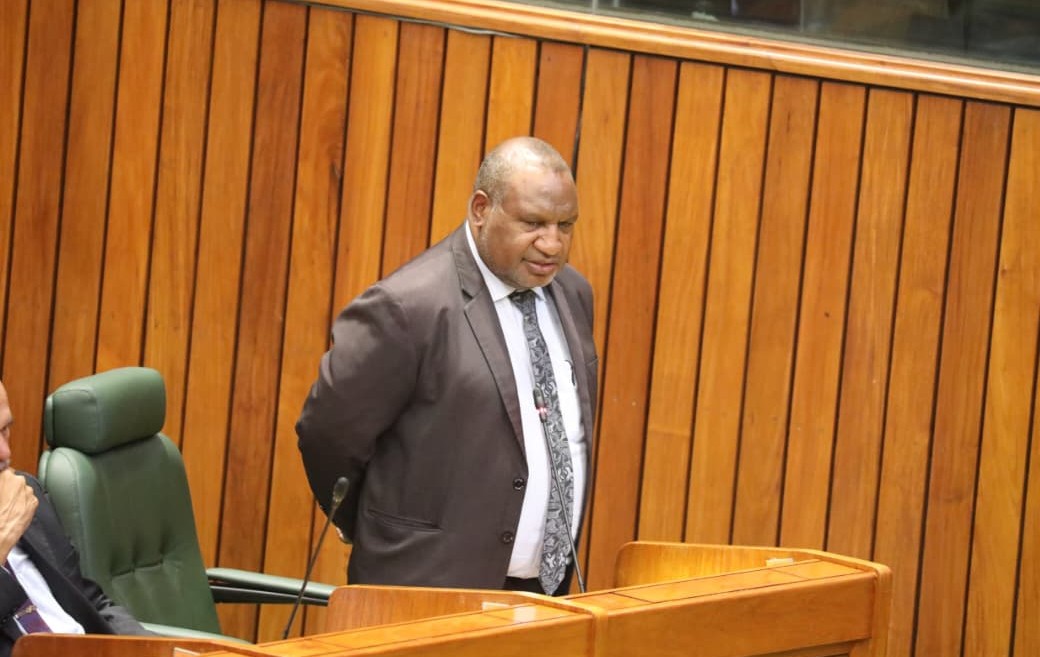
PRIME Minister James Marape has reaffirmed his Government’s commitment to ensuring resource-producing provinces receive greater infrastructure benefits under the Infrastructure Tax Credit Scheme (ITCS), while confirming that its administrative processes are being reviewed as part of the 2027 National Budget preparations.
Responding to questions in Parliament yesterday Enga Governor Hon. Sir Peter Ipatas, Prime Minister Marape said his Government had increased the tax credit ceiling from 0.75 per cent to 3 per cent to accelerate infrastructure development in resource-producing areas and throughout Papua New Guinea.
Under the revised arrangements, the 3 per cent allocation comprises:
• 1.25 percent specifically for resource-producing areas;
• 1.25 persent for infrastructure development across the country; and
• 0.5 percent infrastructure development in Bougainville
Prime Minister Marape said resource-producing provinces were receiving a significantly greater allocation than under the previous arrangement, when they had to compete with other parts of the country for the 0.75 per cent allocation.
“Resource-producing areas now have 1.25 per cent specifically allocated to them. This represents an increase from the previous arrangement,” he said.
The Prime Minister encouraged provincial leaders to consider infrastructure development within the broader context of national unity and equitable development, saying major resource projects should continue to support their host provinces while contributing to development elsewhere in the country.
Prime Minister Marape also defended the allocation of 0.5 percent to Bougainville, acknowledging the historic contribution of the Panguna mine to Papua New Guinea’s conomic development.
“Least we forgot t, from 1972 to 1988, it was th Panguna mine that kept our country afloat. We owe it to Bougainvill to help rebuild the place . It is th right and fair thing to do,” he said.
Governor Ipatas clarified that resource-producing provinces were not opposed to sharing tax credit benefits with other parts of the country but were concerned about the cumbersome administrative processes introduced under the revised legislation.
The Governor said the centralised committee system had created delays in project implementation, citing the deteriorating condition of the important economic road linking Togoba, Wabag and Porgera as an example.
He called on the Government to restore the previous administrative mechanism, which allowed resource-producing provinces greater flexibility to implement infrastructure projects using their allocated share.
Prim Minister Marape acknowledged the Governor’s concerns and confirmed that Treasury officials were reviewing the administrative arrangements, including the possibility of reverting to the previous mechanism without compromising the broader objectives of the revised Tax Credit Scheme.
“As part of th Treasury and Budget processes, we are looking at the arrangements to see weather we can return to the old system, if necessary, without compromising the intent of ensuring that tax credits are properly utilised,” he said.