


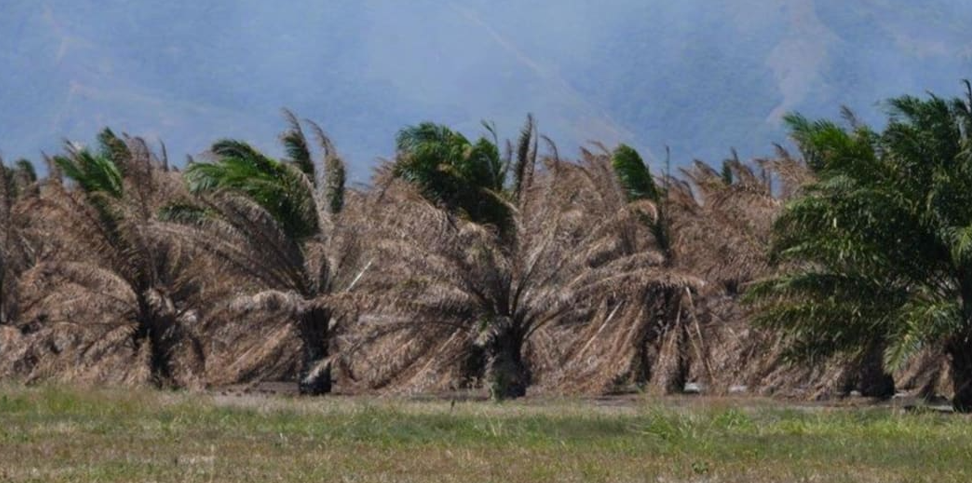
Papua New Guinea is bracing for a severe drought, with several provinces already on “alert” status as El Niño signals intensify heading into late 2026.
The National Weather Service (NWS) has warned that prolonged rainfall deficits combined with emerging El Niño conditions could trigger widespread food insecurity if urgent action is not taken.
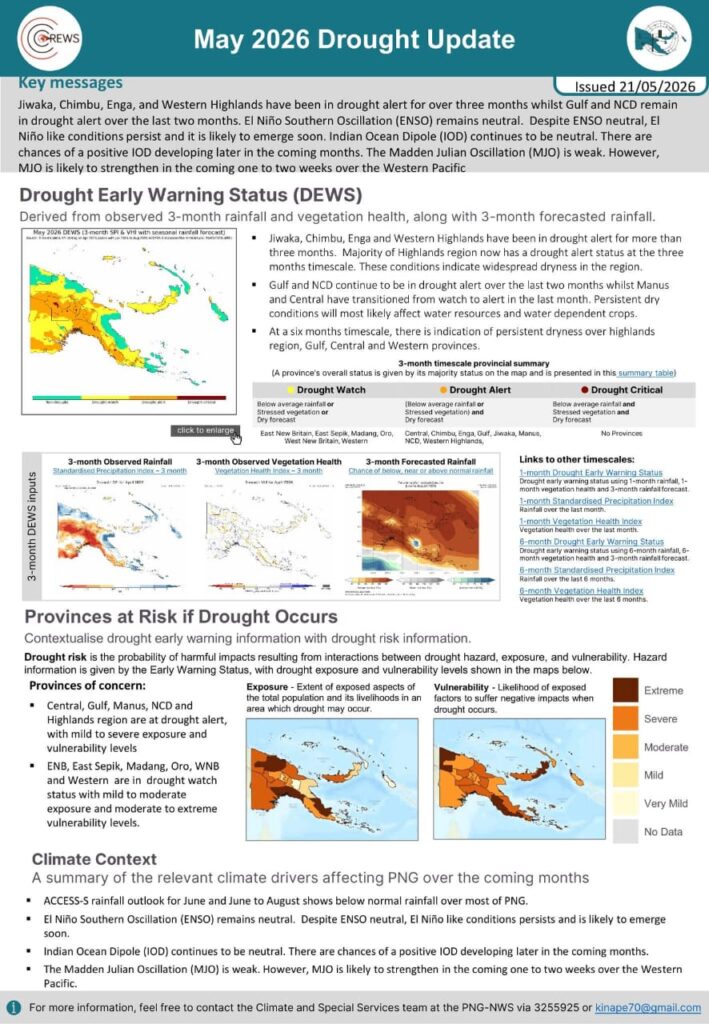
Jiwaka, Chimbu, Enga, and Western Highlands have been under drought alert for more than three months, with farmers reporting shrinking water sources and wilting gardens. Manus and Central provinces have also shifted from “watch” to “alert” after consecutive months of below-average rainfall.
NWS Assistant Director Kasis Inape said a rapid pre-drought assessment was conducted in selected Highlands provinces to evaluate vulnerabilities and preparedness.
“The multi-agency team found that while widespread drought has not yet materialised, early warning signs are evident — including reduced stream flows, declining soil moisture, and concerns over future food crop production,” he said. Communities heavily reliant on rain-fed subsistence farming were identified as particularly at risk.
Although the El Niño Southern Oscillation (ENSO) remains officially neutral, NWS says “El Niño-like” conditions are already evident, with warming Pacific waters, weakening trade winds, and atmospheric indicators pointing to a likely declaration. Other climate drivers, including a possible positive Indian Ocean Dipole, could further suppress rainfall.
The NWS has identified East New Britain, East Sepik, Madang, Oro, West New Britain, and Western Province as highly vulnerable, citing high child malnutrition rates, dependence on agriculture, and low crop tolerance. Forecasts show persistent dryness across the Highlands, Gulf, Central, and Western provinces over the next six months. Authorities have been urged to “turn early warning into early action” by conserving food, water, and seedlings.
In Parliament, Governor Alan Bird warned that government preparedness remains unclear. “If El Niño strikes, we cannot afford to be reactive. We need a clear national plan to protect food security and livelihoods,” he said. Oro Governor Garry Juffa also pressed for answers on funding, food supplies, water security, and health support, recalling the devastating 2015–2016 drought.
Minister Dr. Billy Joseph confirmed that no specific funding has yet been allocated for El Niño preparedness, though monitoring and assessments are ongoing. A National ENSO Taskforce has been established under the Chief Secretary and National Security Authority, bringing together agencies including the NDC, Weather Service, Agriculture, Health, and Defense.
Dr. Joseph acknowledged logistical challenges in reaching remote communities but said coordination with government agencies, private sector partners, and humanitarian organisations is underway. Transport options are being mobilised, and health preparedness plans include stocking aid posts, health centres, and hospitals with medicines and emergency supplies.
He said vvulnerability assessments have already been conducted in Eastern Highlands, Simbu, Jiwaka, Western Highlands, Enga, Southern Highlands, and Hela. To strengthen communication, Starlink devices will be installed in all Provincial Disaster Offices, with updates published on the NDC website.
“The Government remains committed to working collaboratively with all stakeholders to safeguard lives and livelihoods should the El Niño situation worsen,” Dr. Joseph said.
With El Niño signals strengthening and the dry season underway, the coming months may prove decisive. Whether PNG averts a full-scale humanitarian crisis will depend on how quickly authorities act on the warnings already in place.