


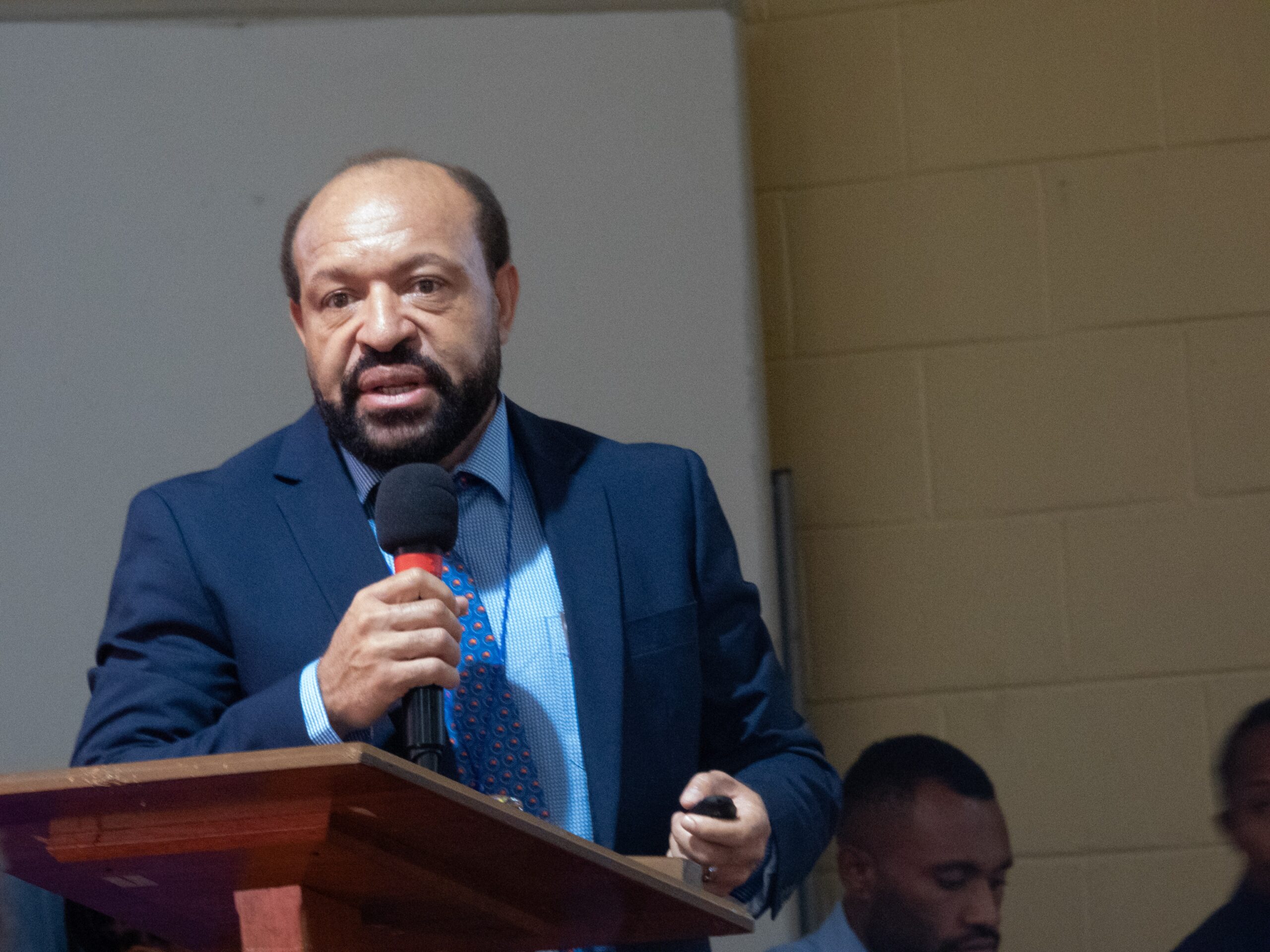
By DALCY LULUA
REREGISTRAR of Political Parties Emmanuel Pok says political parties in Papua New Guinea are legally allowed to raise funds and engage in business activities to finance their election campaigns, provided they comply with the law.
Mr Pok said contesting elections in PNG was expensive, particularly because of the country’s challenging geography, which required political parties and candidates to spend heavily on transportation and reaching voters in remote communities.
He said parties often had to hire helicopters, aircraft and vehicles to campaign in maritime provinces and mountainous regions where many Papua New Guineans lived.
“Contesting elections in Papua New Guinea is very expensive. We have maritime provinces and mountainous regions where the majority of our population are. How can political parties and candidates reach them?” Mr Pok said.
He explained that political parties were recognised under the Organic Law as important democratic institutions and were therefore entitled to undertake fundraising and business activities to maintain their financial stability.
Mr Pok said fundraising by political parties was not new, pointing out that major political parties, including the National Alliance, People’s National Congress (PNC) and Pangu Party, had previously conducted fundraising activities.
He said the law permitted citizen institutions to contribute up to K500,000 in cash, while contributions in kind were limited to K100,000.
However, he acknowledged concerns raised by senior citizens and former Prime Minister Peter O’Neill regarding the manner in which political parties were conducting their fundraising activities.
Mr Pok said the Registry of Political Parties was closely monitoring contributions to ensure political parties and their donors complied with the legal requirements for declaring financial contributions.
“We have regulations and forms in place. Political party executives know very well what to do to disclose the contributions coming into their parties,” he said.
He said both political parties and contributors were expected to make the necessary declarations as part of the established process.
Mr Pok maintained that political fundraising was a legitimate activity under the law and should not be viewed as suspicious or fraudulent when conducted within the legal requirements.
He said the Registry’s major concern was preventing foreign individuals, non-citizens and businesses that were not registered or not Papua New Guinean-owned from financially influencing political parties.
“We have to protect our democracy and protect our elections from hidden and outside influence,” he said.
Mr Pok said the Registry would continue to closely scrutinise political party fundraising to prevent foreign and undisclosed financial interests from influencing the country’s democratic processes.