


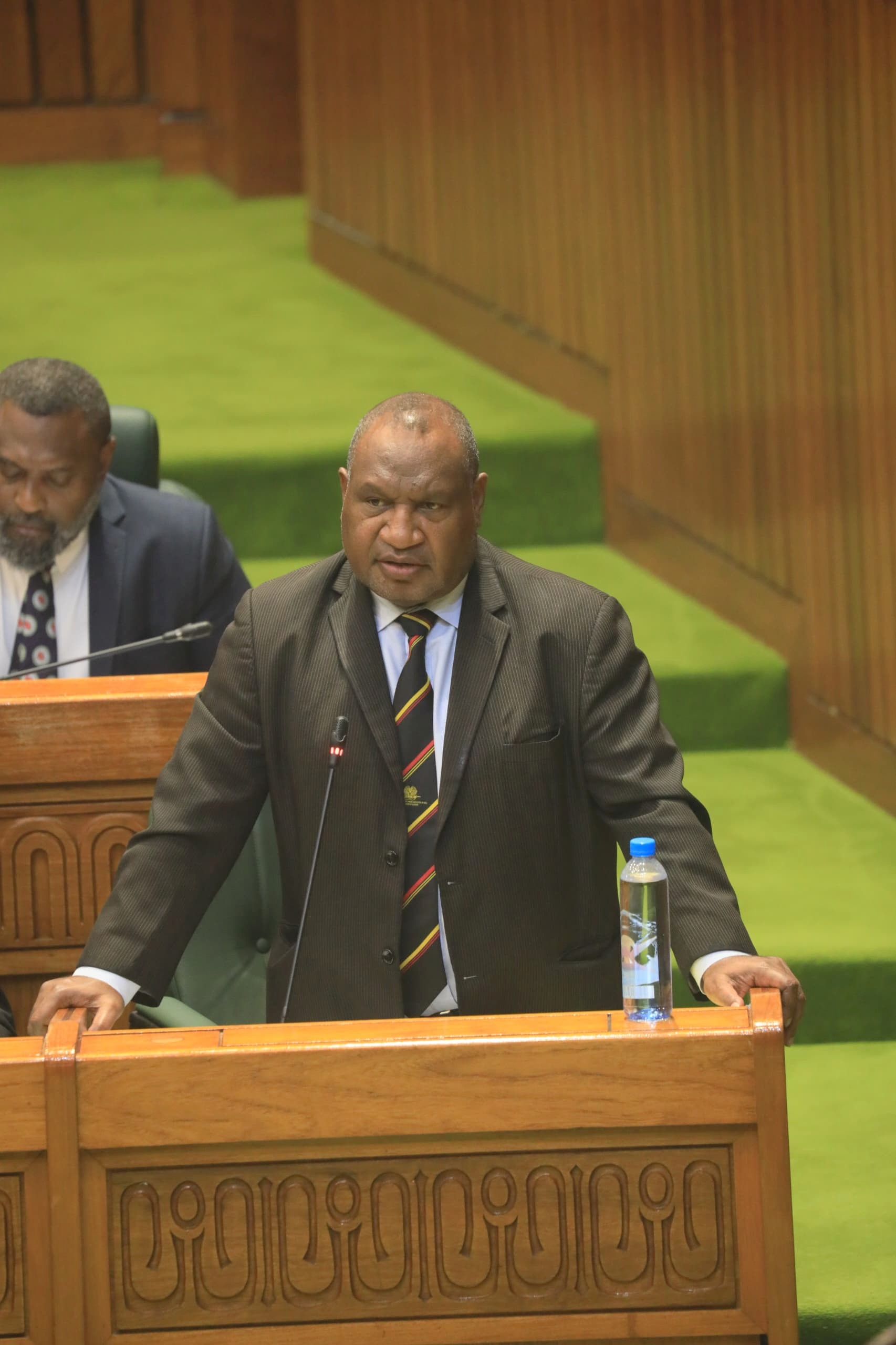
PRIME Minister Hon. James Marape has reaffirmed the Government’s commitment to strengthening St John Ambulance services throughout Papua New Guinea, including through proposed Legislation that will formally recognise and support the organisation’s National Emergency-Service responsibilities.
Prime Minister Marape made the announcement during Question Time in Parliament yesterday (15/07/26), while responding to Questions raised by Abau MP and Opposition Member Hon. Sir Puka Temu regarding the operations, funding and future of St John Ambulance in Papua New Guinea.
The Prime Minister acknowledged the important role St John Ambulance plays in providing emergency medical care, ambulance transportation and rapid response services to people involved in accidents, medical emergencies, natural disasters and other life-threatening situations. He informed Parliament that a proposed Bill relating to St John Ambulance would be brought before Parliament to provide an appropriate Legal Framework for the organisation and strengthen its ability to deliver services on behalf of the State. Prime Minister Marape said the proposed Legislation would help clarify St John Ambulance’s national mandate, institutional arrangements, responsibilities and relationship with the Government and the wider Public Health system.
He said the Government recognised that St John Ambulance was performing an essential Public Service and required a stronger and more sustainable foundation to continue expanding its operations throughout the country. “We recognise the important work St John Ambulance is doing in saving lives and responding to Emergencies. The Government is looking at giving St John Ambulance the proper legal and institutional support it needs to continue serving our people,” Prime Minister Marape said.
The Prime Minister said the proposed Law would complement the Government’s ongoing efforts to strengthen emergency medical services and improve coordination between St John Ambulance, the National Department of Health, Provincial Health Authorities, Hospitals, Police, Fire Services and Disaster-Response Agencies. He said St John Ambulance officers and emergency medical personnel were often among the first responders at road accidents, medical emergencies, fires, natural disasters, disease outbreaks and major public events.
Prime Minister Marape acknowledged that the organisation faced significant operational costs, including the purchase and maintenance of ambulances, fuel, medical equipment, communications systems, emergency-response facilities and the recruitment and training of qualified personnel. He said Papua New Guinea’s difficult geography and widely dispersed population created additional challenges for emergency medical services, particularly in rural Districts and
Provinces where people often travelled long distancesto reach hospitals and health centres.
Mr Marape said theGovernment’s objective was to progressively build an Ambulance Service that was properly coordinated, adequately supported and accessible to more Papua New Guineans. “This is an essential service. When an accident or medicalemergency occurs, our people must have confidence that trained emergency personnel and an ambulance can respondas quickly as possible,” Prime Minister Marape said. He said the proposed St John Ambulance Legislation would beconsidered through the appropriate Government and Parliamentary processes, including consultation with theresponsible Ministries, Departments and relevant stakeholders.
Prime Minister Marape said the Government would also continue examining appropriate and sustainable Funding arrangements for St John Ambulance to ensure that its services were not disrupted and could be progressively extended to additional Provinces and Districts.
He thanked Sir Puka Temu for raising the matter in Parliament and said Questions relating to Emergency Health Services were important because they concerned the protection and preservation of human life. The Prime Minister also commended the leadership, paramedics, ambulance officers, emergency dispatch personnel, volunteers and other staff of St John Ambulance for their dedication and service to Papua New Guinea. “Our St John
Ambulance personnel work under difficult conditions and respond to our citizens during their most vulnerable moments. On behalf of the Government, I thank them for their commitment to saving lives,” Prime Minister Marape said.
Prime Minister Marape assured Parliament that the Government would continue supporting the development of a stronger, properly regulated and sustainable national ambulance and emergency medical-response system for Papua New Guinea.