


By DALCY LULUA
THE Oil Palm Industry Corporation (OPIC) is seeking government intervention over a four-month delay in obtaining fiscal clearance for two proposed laws aimed at strengthening regulation of Papua New Guinea’s oil palm industry.
OPIC General Secretary Kepson Pupita said the corporation had completed extensive consultations and submitted the Oil Palm Industry Authority Bill 2026 and the Oil Palm Industry Management Bill 2026 for fiscal clearance but was still waiting for the process to be completed.
A letter dated July 6, 2026, from the Ministry of Oil Palm to Treasury Minister Ian Ling-Stuckey formally requested fiscal clearance for the two bills, which are intended to be submitted to the National Executive Council (NEC) for endorsement before being tabled in Parliament.
In the letter, the ministry explained that the two bills would establish a new statutory authority and provide the legal framework for administering and regulating the oil palm industry.
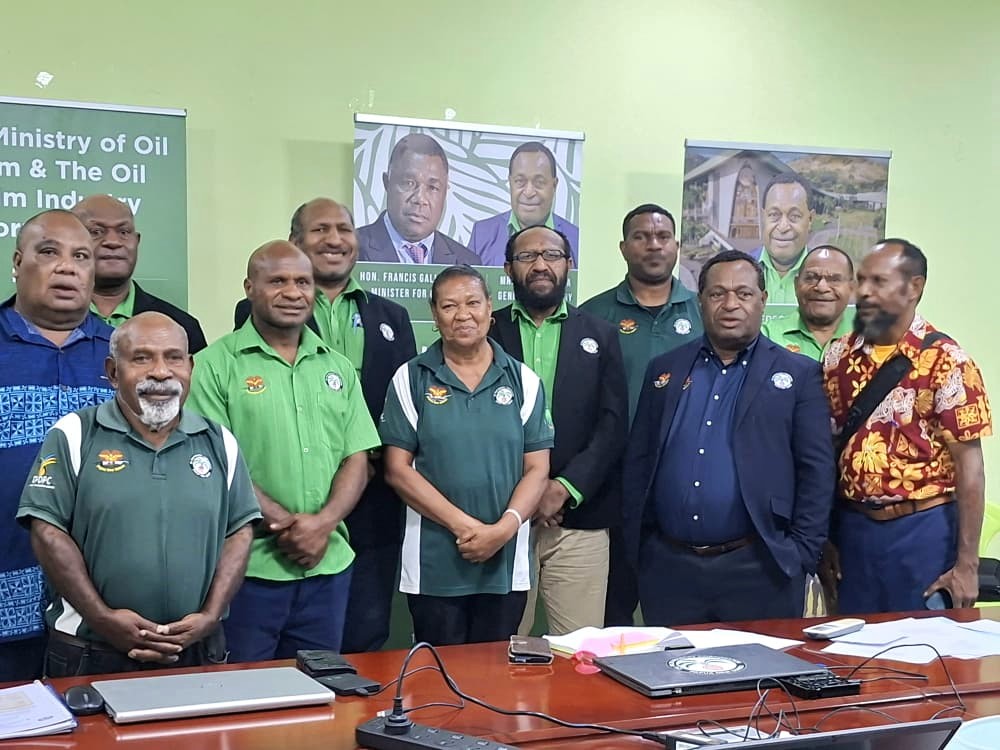
Pupita raised the delay following OPIC’s annual management, project managers’ and accounting meeting, which concluded last Thursday, calling on the Government to intervene so the bills could progress before the end of this year.
“We worked very hard. We completed the bills and sent them to Treasury and Finance for fiscal clearance. It has taken us four months now, and I am asking the Minister to intervene,” Pupita said.
He expressed concern that the corporation had not received an explanation for the delay, saying he had not received letters from the relevant departmental secretaries explaining why fiscal clearance remained outstanding.
Pupita said OPIC had spent more than five years consulting private sector representatives, smallholder growers and relevant government agencies to develop the proposed legislation.
The Oil Palm Industry Authority Bill 2026 would transition OPIC into the Oil Palm Industry Authority (OPIA), a statutory body with regulatory powers, while retaining functions relating to extension services, research and development, and investment facilitation.
The Oil Palm Industry Management Bill 2026 would provide the principal legal framework for the industry, covering licensing, industry operations, landowner benefits, national content, pricing, compensation and downstream processing.
Pupita said the legislation was important to strengthening oversight and ensuring the industry operated under a clearer regulatory framework.
He also highlighted improvements in OPIC’s operations and extension programmes, which he said had contributed to increased yields among growers.
According to Pupita, average yields had risen to about 90 tonnes per year, compared with less than 10 tonnes when he took office on January 1, 2020.
He also said OPIC had expanded its offices nationwide from six to 10 and increased its staffing from about 64 to more than 207.
Despite these improvements, Pupita said the proposed legislation remained a priority and urged the Government to help move the bills through the necessary approval processes.
Sunday Bulletin has sought comment from Treasury Minister Ian Ling-Stuckey regarding the delay but had not received a response at the time of publication.